

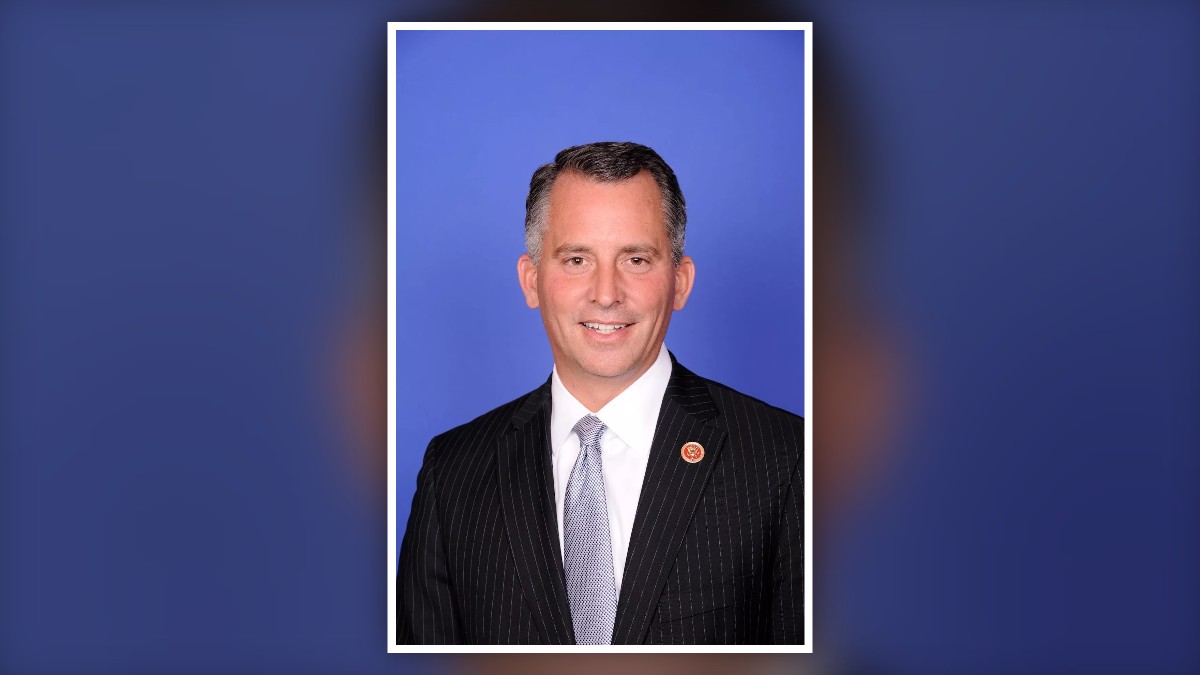
A former Republican is asking Black Florida to trust him over the first Black nominee. The platform is real. So is the ad. The question is what he does with the room after it cheers.
A companion to my piece on Byron Donalds. If I am going to hold the first Black nominee to his record, fairness demands I hold his opponent to the same lamp. Disclosure: I cover this race critically, and I run a housing table, which this race touches. Two campaign claims noted here are contested and are labeled as such.
I spent a long piece asking what Byron Donalds is being used to prove, and to whom, and at whose expense. Honesty requires I turn the same light on the man running against him, because a people that interrogates one candidate and merely enjoys the other is not choosing. It is being comforted. David Jolly got the warm room at FAMU that Donalds did not. Warmth is not a record, and the job of a Black voter this fall is to make both men stand there and answer, not to cheer the one who flatters the room.
Start with the man and the math, because they frame everything. Jolly is a former Republican congressman who won the Democratic nomination for governor with about 60 percent of the vote, running with Gwen Graham, a former congresswoman and the daughter of a beloved Florida governor, as his lieutenant. He is also losing, for now. The University of North Florida poll had Donalds ahead 46 to 41, and Donalds has raised more than ten times as much money. So Jolly is the underdog, a convert carrying a coalition bigger than his new party, in a state that has gone red three times at the top of the ticket. That is the position from which he is asking Black Florida for its trust.
Give the platform its full strength, because it is real and it matters. Jolly’s program, stated plainly at FAMU and on the trail, is housing, healthcare, and education, and the specifics are nothing to Black Florida. He would suspend the 287(g) agreements that deputize local and campus police as immigration agents, and he frames it around due process and the end of profiling. He would expand Medicaid in one of the ten states that still hasn’t and pilot direct delivery of primary care in underserved counties. He says diversity and equity contribute to excellence rather than threaten it, in a state whose government has spent a decade saying the opposite. Measure that against the alternative and, on paper, Jolly’s platform protects the material interests of Black Floridians more than his opponent’s does. I won’t pretend otherwise to sound balanced. On the policy, the gap is real.
Then comes the convert’s question, and a student at FAMU asked it better than any pundit: how do we trust a man who spent thirty years as a Republican not to forget us the day after he wins? Jolly’s answer is his sharpest. He says the problem isn’t that he used to be a Republican. The problem is the people who know better and remain one. He says he fought the Tea Party and lost, fought the Freedom Caucus and lost, fought Trump and lost, went looking in the mirror and left. Credit that answer. A man who changed is not more suspect than a man who stayed inside something he knows is wrong, and the demand that a convert never be trusted is its own kind of trap. Grant it at full strength.
Now the turn, because trust is a receipt, not a speech. The same campaign asking for the room has, at moments, insulted it. Jolly’s campaign ran an ad that Black observers said leaned on racial stereotypes about Black men, and he defended it rather than pull it. His campaign also pushed a claim that Donalds paid a Haitian leader to look past his position on Temporary Protected Status, a claim Donalds disputes and that remains contested. A man cannot ask Black Florida to hand him its vote and, in the same season, run the kind of imagery Black Florida has spent a lifetime being reduced by. That is not a small thing to wave past because the policy is better. It is exactly the sort of thing we would never let slide from the other side, and the test of whether we are choosing or being comforted is whether we hold it against him too.
And name the thing Jolly himself named, to his credit, at FAMU. Speaking about immigration enforcement, he said he does not live with an ounce of fear driving down his own street, and then he said the word out loud: that is privilege. He is right, and it cuts both ways. The same privilege that lets him speak fearlessly about profiling is the privilege of a white candidate who will never personally pay the price of being wrong about it. That does not disqualify him. It just means he has to prove the coalition he leads will remember Liberty City, Little Haiti, and Pahokee after the votes are counted, because his own traffic stops won’t remind him.
So here is the receipt Black Florida should demand, and it is the same one I demanded of Donalds, pointed the other way. Not whether he says he is with us. What he will actually do, and whether the coalition he builds will still know our name once it no longer needs our turnout. The warm room he got at FAMU was the right instinct aimed at neither man in particular, because it was never supposed to be a reward. It was supposed to be a test, the same test the students gave Donalds when they pressed him until a fire alarm ended the night. Jolly earned a warmer version of that test, and warmth is where scrutiny goes to die. He should get the harder version, from the people whose votes he needs, precisely because he needs them.
David Jolly likes to quote something his wife told him: in a world of Donald Trump, be Ted Lasso. It is a good line, and the decency underneath it is not fake. But governing isn’t a sitcom, and a Black vote isn’t a feeling. A governor signs the budget, suspends or keeps the 287(g) order, expands or refuses the Medicaid money, protects or abandons the vote. Jolly’s platform says he would do the right thing on each. The receipt is whether he would still do it on the Tuesday no camera is watching, for the people who cannot make him afraid. Cheer the warm room if you want. Then make him sign the receipt, keep a copy, and hold it up the day after the election, win or lose. That is not cynicism about a decent man. It is the only way a people turns a candidate’s warmth into a governor’s record.
Denzel D. Burnside III is a Miami-Dade native, a minister, and a former organizer and campaign manager. He founded and leads the North Carolina Housing Table as executive director. He also founded The State (readthestate.com) and The Operative Ledger (operativeledger.com).
Hy-Lo News encourages community members, thought leaders, social commentators, experts, and really ANYONE to submit commentary expressing their opinions and sharing their points of view. The views they express in their Op-Eds are their own, but we believe people have the right to a platform to share them. However, we will never condone or publish hate speech, violence, bullying, or anything our editorial team deems problematic.
To submit your Op-Ed, email us at info@hylonews.com.
0 comments on “OP-ED | The Convert and the Coalition: David Jolly and the Receipt Black Florida Should Demand”