

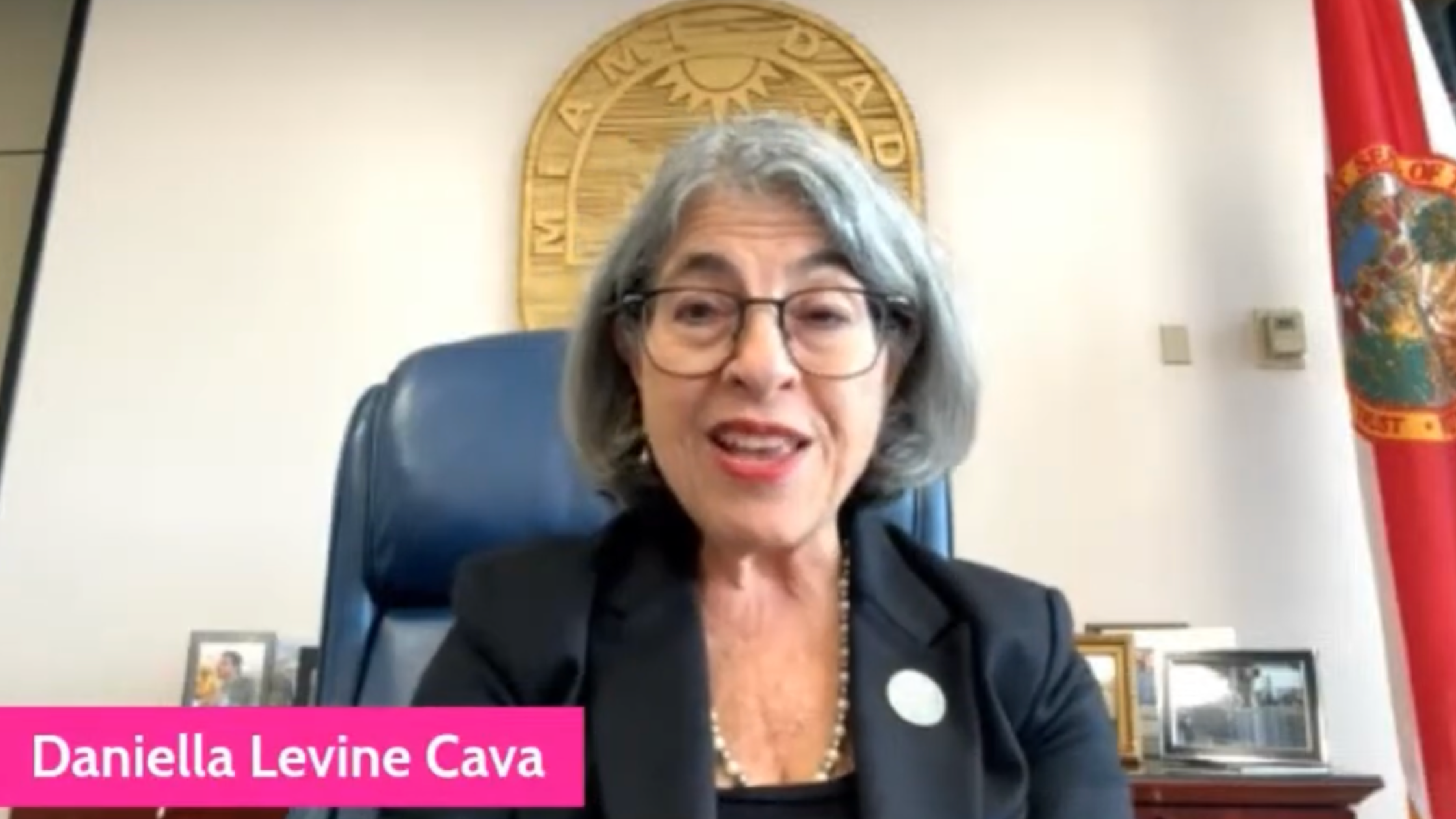
The mayor warns that the proposed homestead exemption expansion could lead to millions in county budget losses, service reductions and increased costs for renters and businesses.
As Florida voters prepare to decide on Amendment 3, Miami-Dade County Mayor Daniella Levine Cava is urging residents to look beyond the potential property tax savings and consider how the proposal could affect the services and resources they rely on every day.
During an interview on Hy-Lo News’ Can We Talk podcast, Levine Cava discussed the potential financial consequences of the proposed constitutional amendment, which would expand the homestead property tax exemption for qualifying homeowners.
While acknowledging the financial pressures facing Florida residents, the mayor said the proposed tax relief could come at a significant cost to local governments and the communities they serve.
“For Miami-Dade County government, it would mean $385 million impact in the first year, almost $700 million in the second year,” Levine Cava said.
According to the mayor, that represents approximately 20% of the county’s general fund property tax budget, which helps pay for essential services, including police and fire rescue, parks, roads, transit and libraries.
She warned that the potential revenue loss would not only affect county government but also municipalities, the Children’s Trust and other public entities that depend on property tax revenue.
What Could Amendment 3 Mean for Renters?
Although Amendment 3 centers on property tax savings for qualifying homeowners, Levine Cava said renters could also feel the financial consequences.
Because the proposed exemption applies to homesteaded properties, local governments could look to other revenue sources to make up for the lost property tax dollars.
That could include increasing taxes on commercial properties and landlords who do not qualify for the homestead exemption. Those additional expenses could eventually be passed down to tenants and consumers.
The mayor referenced a study estimating that typical rents in Miami-Dade County could increase by $300 to $400 per month as a result of the potential tax shift.
“It’s only the measure only applies to the homesteaded homeowner property, so they will look, we will look, I’m sure, as a county to whether we could charge more to commercial landlords, and that will in turn … be passed on to the renter,” she said.
Levine Cava described the proposal as a potential tax shift rather than a straightforward tax cut, arguing that residents could end up paying more through other expenses.
Seniors and Community Organizations Could Also Be Affected
Levine Cava also raised concerns about how reductions in property tax revenue could affect older adults and nonprofit organizations throughout Miami-Dade County.
The county currently uses property tax dollars to support senior services, including programming at activity centers, meals for homebound seniors and certain in-home support services.
The mayor said approximately 1,800 seniors participate in county activity center programming, while the county also provides thousands of meals to homebound older adults.
She warned that those services could face cuts if the amendment passes.
Nonprofit organizations that provide services to children, seniors and young people could also experience funding reductions.
Levine Cava said the county provides tens of millions of dollars to nonprofit organizations working in areas such as youth development, crime prevention, environmental protection and arts and culture.
Those programs, she explained, could be among the first areas considered for cuts as local governments work to manage reduced revenue.
Police, Fire Rescue, Libraries and Other Services at Risk
The mayor emphasized that property tax revenue helps support services that residents may not always associate with their tax bills.
Even residents who do not regularly visit public libraries or use public transportation still depend on other county-funded resources, including roads, sidewalks, police and fire rescue.
Levine Cava said the county could face difficult decisions, including potentially closing as many as 10 libraries if Amendment 3 passes.
She also explained that the county’s overall budget includes revenue from services such as Miami International Airport, the seaport, water and sewer and garbage collection. However, those funds are generally designated for the specific services that generate them and cannot simply be redirected to cover property tax revenue losses.
To help residents better understand where their tax dollars go, Levine Cava directed people to the county’s website, Miami-Dade.gov, where they can search for the “Your Tax Dollars at Work” resource.
The mayor said the resource breaks down county departments and the services supported by local tax dollars.
What Happens if Amendment 3 Does Not Pass?
While Levine Cava outlined the potential consequences of the amendment passing, she acknowledged that residents are still struggling with the cost of living, including rising housing, insurance, grocery and utility expenses.
She said her administration will continue working to address affordability through housing development, improved public transportation, small business support and efforts to attract higher-paying jobs.
Levine Cava highlighted the county’s housing efforts, saying her administration has helped build 12,000 additional homes, with another 22,000 in the pipeline. She said the county is working toward nearly 50,000 homes built during her tenure as part of a broader effort to address the housing shortage.
The mayor also pointed to the need for additional solutions to reduce the tax burden on residents who can least afford it.
She suggested that future property tax relief proposals could be more targeted toward groups such as seniors on fixed incomes or families seeking to inherit property from their parents.
“We believe that relief is warranted, but this is across the board,” she said.
Ultimately, Levine Cava said she wants residents to understand the potential trade-offs before making their decision.
“Amendment Three just goes, I would say, too far for most of us in understanding what the tradeoffs will be,” she said.
As voters consider the proposal, the mayor encouraged residents to understand not only what they could save on property taxes but also what local services and resources could be affected.
The full conversation with Miami-Dade County Mayor Daniella Levine Cava is available on the Hy-Lo News YouTube channel as part of the Can We Talk podcast.
0 comments on “Miami-Dade Mayor Daniella Levine Cava Breaks Down How Amendment 3 Could Impact Residents Beyond Homeowners”