

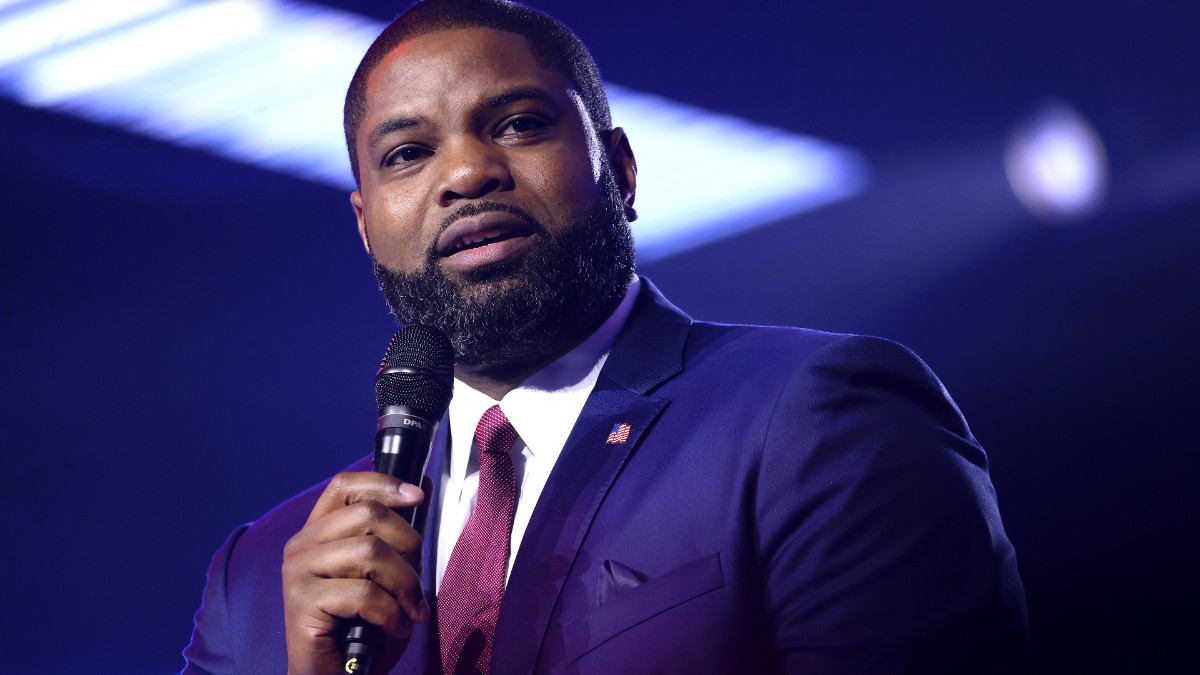
He is the first Black man his party ever put atop a Florida ticket. The pride is real. So is the record. The distance between the two is the whole story.
One argument, drawn together from four pieces I have written on Byron Donalds this cycle: who is showing up, what the voting record says, the cookout question, and the history he got wrong. Disclosure: I cover Donalds critically on this beat. Several campaign accusations noted here are contested and are labeled as such.
The cookout keeps coming up, and I do not want to laugh it off. The coastal explainer treats it as a cute metaphor about who gets a plate, but anyone raised in it knows it is a court. It is where a community decides, with no judge and no appeal, who is still one of us. So when Byron Donalds, the first Black man his party has ever put atop a Florida statewide ticket, keeps getting told he is not welcome at the cookout, I want to take the court seriously and ask what it is actually ruling on. Because it is not ruling on his skin. It is ruling on his record, and the two have been getting confused for a year because one of them comes with a photograph that makes us proud.
The photograph is real, and I will not pretend it is nothing. Donalds has the Brooklyn story, the single mother, the year at Florida A&M before the degree at Florida State, the up-from-nothing testimony every one of us recognizes because it is ours too. A child who sees a man who looks like him at the top of a ticket learns what is possible, and that lesson matters whether or not I like the man teaching it. Representation is real. It’s not the same as an agenda, and the whole con of this moment is getting us to accept the first instead of the second.
Start with who is actually showing up, because it should bother Democrats more than it apparently does. In the final weeks of this race, the candidate physically in Black churches, on Black campuses, in Black neighborhoods, with a coalition of Black pastors and business owners organized to carry his message, is the Republican. Donalds walked into Antioch Missionary Baptist in Miami Gardens under a sign that read “Faith Leaders for Byron Donalds,” and yes, a churchgoer named Kiara walked out over it and said so on video, but he was in the room. His opponent, David Jolly, a former Republican, has run his campaign largely through attacks, including an ad that observers said leaned on racial stereotypes about Black men, which he defended, and a claim that Donalds paid a Haitian leader to look past his position on Temporary Protected Status, which Donalds disputes and which remains contested. Draw it fairly: one candidate is in the pews, and the other is in the ad breaks. Democrats should be alarmed by that, not defensive.
But showing up is not the same as being for, and here the record does the talking. Donalds voted for the 2025 reconciliation law, which paired top-end tax cuts with deep cuts to Medicaid and food assistance. That is not an abstraction in a state where more than four million people are on Medicaid. The people who lose coverage and lose food help when that math runs are disproportionately the exact people whose story he borrows to get elected. Set that beside his 2024 remark that the Black family was stronger during Jim Crow, a claim he later said was twisted but did not abandon, and you have the pattern in two strokes: the symbol is Black, and the agenda is aimed at the people the symbol comes from. Colin Kaepernick had a word for the version he watched in the NFL: the Black face out front while the thing the players protested rolled on untouched. Put the same frame on a campaign that spent a decade thinning Black political power in Florida, through the maps, the voter laws, the higher-education fights, and the most valuable thing that movement could produce at the end of it is a Black man willing to stand on top and call it progress.
And then there is the tell, the thing that turns alignment into something worse. There are two ways to oppose a voting-rights bill: a clean way and a dirty way, and the difference is whether you argue about the bill or lie about the history. In a May 2026 interview, Donalds justified his position by claiming the Voting Rights Act of 1965 was created because of Democratic gerrymandering. PolitiFact rated that False, and it is not close. The Act was passed after a century of violence built to keep Black Americans from voting at all, after Selma, after the bodies, after a movement bled for it on a bridge named for a Confederate general. To rewrite that as a partisan redistricting scheme is not a different opinion about the same facts. It is a different set of facts, and the different set is false. A vote against a bill affects one bill. A false history teaches a generation that the protection was never load-bearing, and that a protection people no longer understand is easy to take. It lands precisely because a Black man is the one saying it, borrowing a credibility a white official never could.
Let me give the other side its strongest form, because the piece is worthless without it. A Black conservative is not a traitor for being a conservative. Black America has never been one thing, and the demand that it be is its own kind of cage. Donalds believes what he believes, and plenty of Black Floridians share pieces of it on faith, on business, on crime. If the case against him were only that he is a Republican, I would not be writing it, because that case is small. But that is not the case. The case is the gap between what the symbol says and what the agenda does, and the only test that matters for any leader the powerful lift up is this: when your community’s actual interest was on the table, did you spend your position to protect it, or spend your community to protect your position? Ask it of Donalds and the record answers.
So here is the ruling the cookout is really handing down, and it is not about a plate. A first is a genuine milestone, and a Black child seeing a Black man in that chair is nothing. And the platform he would carry into that chair is the movement’s platform, which has spent a decade making Black Floridians’ votes count for less. Both are true, and no amount of pride or cynicism unties that knot. It just has to be held. A governor is not a symbol. A governor signs the budget, draws the maps, and decides whether the state protects the vote or dismantles it. A first who governs against his own people is still governing against his own people. The pigment does not vote. The platform does. So run, Byron, run, all the way to the mansion if the numbers hold. But read the agenda out loud before you cheer the face, because the oldest question in Black America is the one the cheering never lets a first ask: run toward what, run from whom, and who pays the fare?
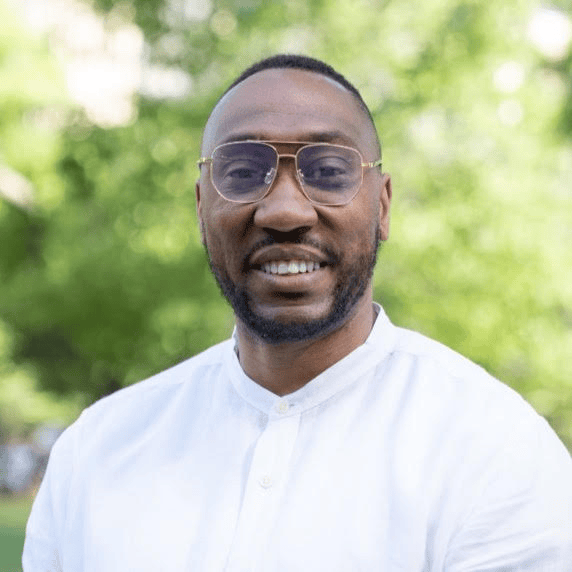
Denzel D. Burnside III is a Miami-Dade native, a minister, and a former organizer and campaign manager. He founded and leads the North Carolina Housing Table as executive director. He also founded The State (readthestate.com) and The Operative Ledger (operativeledger.com).
Hy-Lo News encourages community members, thought leaders, social commentators, experts, and really ANYONE to submit commentary expressing their opinions and sharing their points of view. The views they express in their Op-Eds are their own, but we believe people have the right to a platform to share them. However, we will never condone or publish hate speech, violence, bullying, or anything our editorial team deems problematic.
To submit your Op-Ed, email us at info@hylonews.com.
0 comments on “OP-ED | The Face and the Record: Byron Donalds and the Agenda Underneath the Pride”