

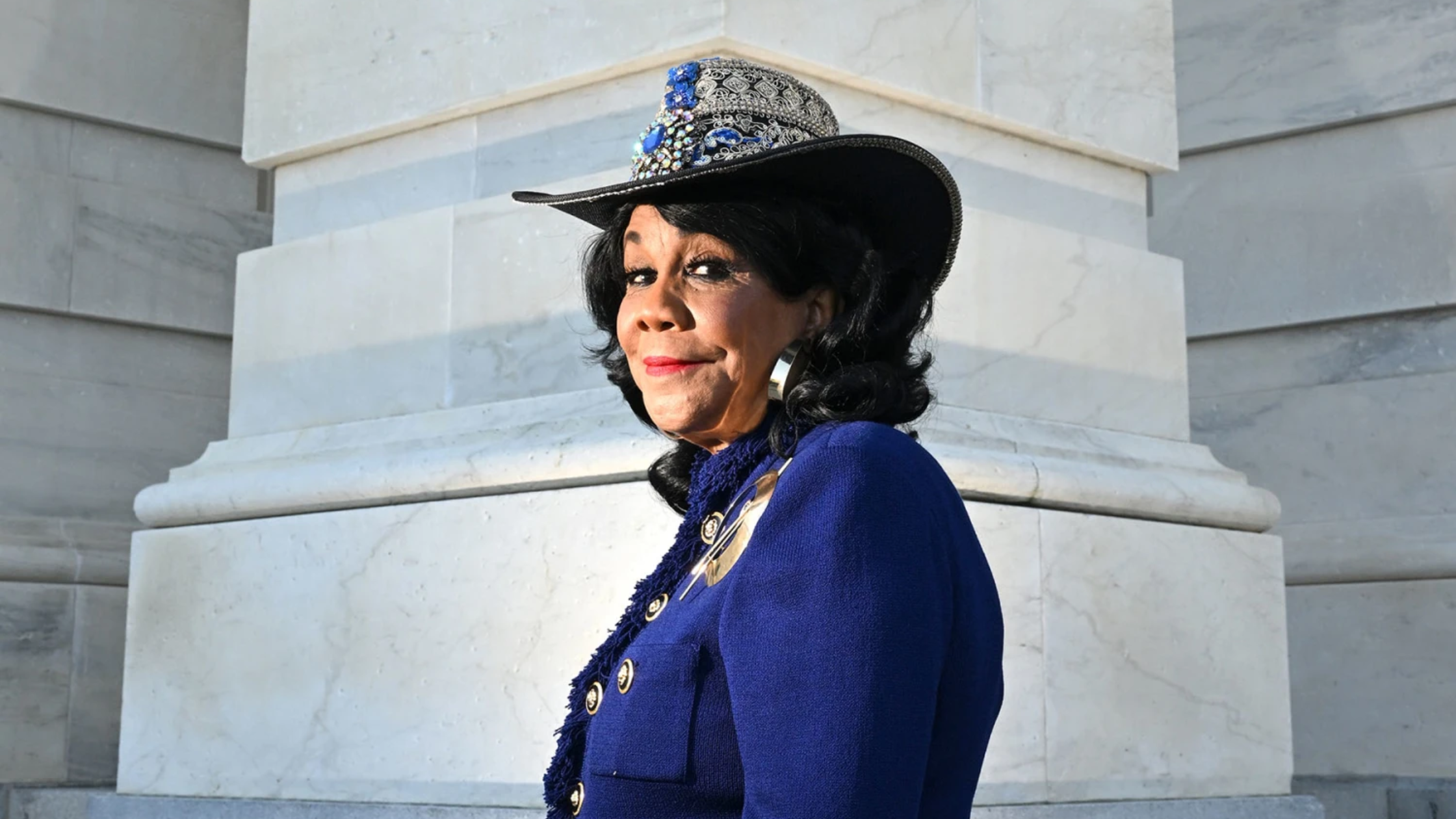
The Miami congresswoman’s bill would expand annual glaucoma screening coverage, fund community-based programs and invest in research into treatments for optic nerve damage.
Congresswoman Frederica S. Wilson is seeking to expand access to glaucoma screenings and treatment with new legislation aimed at people who face a higher risk of developing the disease.
Wilson, who currently represents Florida’s 24th Congressional District, introduced the Glaucoma Vision Act of 2026 on Sept. 16. The bill would require several public and private health insurance programs to cover annual glaucoma screenings for eligible people and establish federal funding for community-based screening and follow-up care.
“Glaucoma can steal a person’s sight before they even know they have it. By the time symptoms appear, the damage may be irreversible,” Wilson said in a press statement. “A screening could change the course of someone’s life, but too many people face gaps in coverage or cannot afford the care they need.”
Why glaucoma screening matters
Glaucoma is a group of eye diseases that can damage the optic nerve and cause permanent vision loss. Because the disease can progress without noticeable symptoms, people may not realize they have it until significant damage has occurred.
A 2024 study published in JAMA Ophthalmology estimated that 4.22 million adults in the United States were living with glaucoma in 2022, including about 1.49 million people with vision-affecting glaucoma. The study also found that glaucoma prevalence was higher among Black adults than White adults.
Research has also documented gaps in glaucoma detection and care among racial and ethnic minority communities.
A 2024 multicenter study of community-based glaucoma screening programs found that 27% of participants screened positive for glaucoma or suspected glaucoma. The programs specifically targeted communities with high levels of poverty and large African American and Hispanic/Latino populations. Researchers said the rate was about three times the national average and highlighted the potential of community-based approaches to reach people who are less likely to have access to eye care.
A separate analysis of nearly 1 million patients in the American Academy of Ophthalmology’s IRIS Registry found that Black and Hispanic patients had higher odds of poor vision and were less likely than White patients to receive certain forms of eye-care monitoring, including eye exams and optical coherence tomography.
What the Glaucoma Vision Act would do
Under the proposed legislation, annual glaucoma screenings would be covered for certain people at higher risk through private insurance, Medicaid, Medicare Part B and the Federal Employees Health Benefits Program.
The bill would also eliminate applicable Medicare Part B cost-sharing requirements for covered glaucoma screening. The coverage provisions would generally begin in 2027.
People who could qualify for screening under the legislation include adults 40 and older with African, Hispanic/Latino or Asian ancestry, as well as adults with certain clinical risk factors.
Those risk factors include diabetes, a family history of glaucoma, elevated eye pressure, certain blood pressure conditions, myopia and chronic corticosteroid use. Adults 60 and older would also qualify under the bill.
The legislation would also focus on reaching people who may have difficulty accessing an eye doctor.
Through the Centers for Disease Control and Prevention’s Vision Health Initiative, the bill would authorize $10 million across fiscal years 2027 and 2028 for competitive grants supporting free or low-cost glaucoma screenings and follow-up treatment for uninsured and underinsured people at higher risk.
The grants could also support mobile screening units, community education, care coordination and glaucoma surveillance, with priority given to projects serving racial and ethnic minority communities and other populations experiencing a high burden of vision loss.
That community-based approach is consistent with research showing that bringing glaucoma screening into primary care and community settings can help identify people with suspicious optic nerve findings and other eye conditions. A study of a Philadelphia telemedicine screening program, for example, used primary care offices and federally qualified health centers to reach African American, Hispanic/Latino and Asian adults over 40, as well as people with certain risk factors.
Researchers have also found that identifying someone at risk through screening is only part of the challenge. A study of a predominantly Black population found that factors including transportation access and living arrangements were associated with whether people returned for follow-up eye care after a glaucoma screening.
Research would also be part of the legislation
The Glaucoma Vision Act would authorize another $10 million across fiscal years 2027 and 2028 for National Eye Institute research focused on glaucoma and optic nerve damage.
The research provisions include work on optic nerve repair, neuroprotection, gene therapies and other approaches aimed at preserving or restoring vision.
Peer-reviewed research has established why early detection remains important. A review published in Progress in Brain Research found that early diagnosis and treatment are important for reducing the risk of progressive and irreversible visual loss from glaucoma.
While treatment can slow the progression of glaucoma, researchers continue to study ways to better detect the disease and protect or restore damaged vision.
Support from eye-health organizations
The legislation has received support from several organizations in the eye-health field, including the American Academy of Ophthalmology, American Glaucoma Society, American Society of Cataract and Refractive Surgery, Association for Research in Vision and Ophthalmology, Alliance for Vision Research, Cornea Society, Macula Society, Foundation Fighting Blindness and Prevent Blindness.
Michael Repka, medical director for governmental affairs at the American Academy of Ophthalmology, said in a press statement that the organization supports the bill’s efforts to expand screening coverage and research.
Prevent Blindness also endorsed the legislation, citing the need for earlier detection and treatment and its potential impact on independence and quality of life.
The bill has 24 cosponsors, according to the U.S. Government Publishing Office, including Reps. Joyce Beatty, Sanford Bishop, Troy Carter, Yvette Clarke, Jasmine Crockett, Lois Frankel, Robin Kelly, Lucy McBath, Kweisi Mfume, Terri Sewell, Bennie Thompson, Maxine Waters and Bonnie Watson Coleman, among others.
As of Sept. 25, H.R. 10476 has been referred to the House committees on Energy and Commerce, Ways and Means, and Oversight and Government Reform. It has not yet become law.
For Wilson, the legislation is ultimately about making earlier detection more accessible to people who may otherwise go without care.
“We have the knowledge to catch glaucoma earlier. We must make sure people have the opportunity to act on it,” Wilson said in a press statement.
This is a Hy-Lo News Staff Report.
Sign up for our weekly email newsletter and watch our weekly LIVE podcast news show every Thursday at 7pm. Subscribe to our YouTube page to get alerts for the show.
Do you have news to share? If so, send Hy-Lo News your story ideas by clicking here.
0 comments on “Rep. Wilson Introduces Glaucoma Vision Act to Expand Screenings and Prevent Vision Loss”