

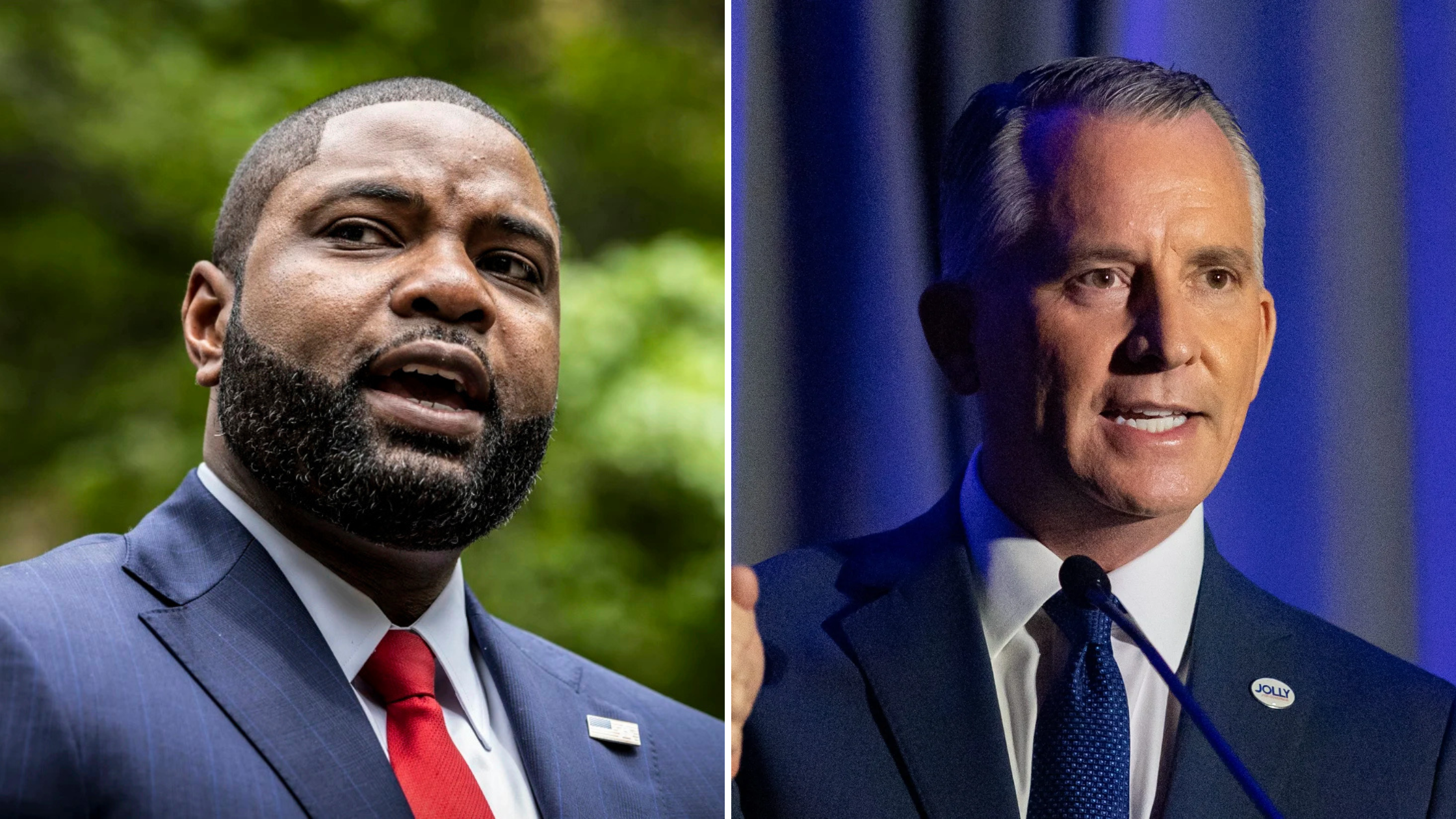
The primaries are over. The general is set. Here is what the numbers actually say.
Third in a four-part series on the 2026 Florida governor’s race. Part one, “Twenty Years, One Chair,“ is how Florida got here. Part two, “The DeSantis Inheritance,“ is the record the next governor takes over. Part three, “The Field and the Data,“ is the candidates and the numbers. Part four, “Run, Byron, Run,“ is the reckoning on the Trump endorsement and what it means. A standalone companion, “First, and for Whom,“ keys in on Byron Donalds’s historic first and the full race breakdown. The primaries are decided: on August 18, Byron Donalds won the Republican nomination, and David Jolly won the Democratic nomination. This is the field that settles it in November.
An operative who will not read the numbers is just a fan with an opinion. So now that the votes are in, let me lay the finished field out the way I laid out the congressional forum, candidate by candidate, number by number, and then tell you what the numbers actually mean.
The Republican side
Byron Donalds is the Republican nominee, and it was never close. The Naples congressman carried Donald Trump’s “complete and total” endorsement all the way to a decisive primary win on August 18. Along the way, he built a fundraising machine that has raised more than $103 million, including a $10 million contribution from Citadel billionaire Ken Griffin to his affiliated committee. That is not a campaign account. That is a fortress.
The most telling story of that primary is the one Donalds beat. Jay Collins, the sitting lieutenant governor, was handpicked by Ron DeSantis, turning the Republican race into a proxy war between the two most powerful Republicans in the country. Trump backed Donalds. DeSantis, term-limited and refusing to bless the man Trump chose, backed Collins and questioned Donald’s fitness. It was never really a policy fight. It was a loyalty fight between Trump and DeSantis, and Trump’s man won it. The president overrode the governor and picked his own successor in the governor’s own state, and the rest of the field never had the votes.
Here is the primary in the actual numbers. Donalds took about 47.8 percent of the Republican vote, winning by roughly thirty points, though just shy of a majority in a crowded field. Collins finished a distant second, nearly 18 percent. The former House Speaker Paul Renner took about 8 percent, and the investor James Fishback, who spent the race calling Donalds a “slave” and a “DEI Republican,” finished at about 4 percent. The shares are approximate; confirm against the state canvass before printing.
| Republican candidate | Share | Who |
| Byron Donalds | about 47.8% | Naples congressman, Trump’s pick. |
| Jay Collins | about 18% | Lieutenant governor, DeSantis’s pick. |
| Paul Renner | about 8% | Former Florida House Speaker. |
| James Fishback | about 4% | Investor who racially attacked Donalds. |
Read that bottom line. The rival who reduced Donald to his skin finished at four percent. The movement did not punish the degradation, but the primary electorate did not reward it either.
The Democratic side
David Jolly is the Democratic nominee, and how he got there tells you as much as the win itself. Jolly won going away, taking roughly 60 percent of the vote, about 724,000 ballots, over a field that included the state representative Dotie Joseph and several others. And here is the sentence that ought to stop every Democrat in this state cold. David Jolly is a former Republican congressman who left the party over Trump. The Democrats just handed their gubernatorial nomination, by a landslide, to a man who was on the other team a few years ago.
That is the state of the party’s bench, the thing I have been writing about all year, from the Senate race to the Gillum retrospective to the Broward seat that just slipped away. When the strongest Democrat for governor is a recent convert who wins by thirty points, that is not a party surging with its own. That is a party reaching outside itself for a champion, because it did not build one. The same pattern that cost Black Broward its congressional seat this week- a party that will not do the long work of growing and consolidating its own leaders- is the pattern that put a former Republican at the top of the Democratic ticket.
The money, in one number
If you want the whole race in a single comparison, use this one. Donalds has raised more than $ 103 million. Jolly entered the general with a small fraction of that, on the order of a few million. That is a gap of more than ten to one, and it reflects two hard truths at once: the Republican grip on Florida’s donor class, and the difficulty Democrats have convincing serious money that this state is winnable. Money is not everything. It does not vote. But it buys the ads, the staff, the turnout machine, and the sheer presence that makes a candidate feel inevitable; right now, one side has a fortress, and the other has a down payment.
The scorecard
Here is where the race stands now that the field is set, laid out plainly.
| The question | The answer | What it means |
| GOP nominee | Byron Donalds, about 47.8% on Aug 18. | Trump’s August 18 endorsement was a coronation. |
| The GOP proxy war | Donalds beat DeSantis’s pick, Jay Collins (about 18%), by roughly 30 points. | The president overrode the governor. |
| Dem nominee | David Jolly, roughly 60 percent of the vote. | A former Republican wins the Democratic nomination in a landslide. |
| The money | Donalds $103M-plus, Jolly a few million. | A gap of more than 10 to 1. |
| The general | Donalds 46, Jolly 41 (UNF, refresh). | Closer than the money suggests. |
| The calendar | General November 3. | This is where it gets real. |
Read that table and two things jump out. On paper this looks like a Republican walkover: a nominee with a fortress and a president behind him, against a party that had to reach outside itself for a convert and has no money. And yet the one number that measures the actual November matchup, the University of North Florida poll that had Donalds ahead of Jolly 46 to 41, says the general is closer than any of that would predict. A five-point race, in a state this red, with this money gap, is a live race. That is the whole tension of 2026.
I have run enough races to know that two facts this far apart usually mean somebody is about to be surprised. On one side, a Trump-anointed nominee with a hundred million dollars who cleared his primary without breaking a sweat. On the other hand, a party so thin that it just nominated a former Republican by a landslide. And still the general sits at five points. That gap does not mean the Democrats are strong. It means Florida is not as red as its donor class and its maps pretend to be. Closing five points against a machine like that would take exactly what the party has refused to build for a decade: real organizing in Liberty City and Pahokee, and every place the consultants fly over, the infrastructure I keep writing about, the ground game money cannot fake. The opening is real. The question is whether anyone will do the unglamorous work to walk through it.
What the numbers cannot tell you
Two honest caveats, because I would rather you trust this than be dazzled by it. A general electorate is a different animal from a primary electorate, and it can move fast once voters tune in and the ads start running. And money buys noise, not necessarily votes, as Florida itself proved in 2018, when a governor’s race was decided by 0.4 percent, no matter what the bank accounts said. The numbers set the stage. They do not write the ending.
What the numbers do tell you, clearly, is the shape of the thing: a Trump-anointed nominee running downhill, a Democratic Party that had to import its champion, and a general election that is somehow still within reach. A fortress, a searching party, and still five points. That is not a coronation. It is a door left open. Part four walks through it. Not who is likely to win, but what it would actually mean, and what it would actually cost the community this paper is written for, if the frontrunner does.

Denzel D. Burnside III is a Miami-Dade native, a minister, and a former organizer and campaign manager. He is the founder and executive director of the North Carolina Housing Table, a statewide housing coalition.
Hy-Lo News encourages community members, thought leaders, social commentators, experts, and really ANYONE to submit commentary expressing their opinions and sharing their points of view. The views they express in their Op-Eds are their own, but we believe in the right to provide people a platform to share them. However, we will never condone or publish hate speech, violence, bullying, or anything our editorial team deems problematic.
To submit your Op-Ed, email us at info@hylonews.com.
0 comments on “OP-ED | The Field and the Data: Donalds vs Jolly, and What the Numbers Say About the November Matchup”