

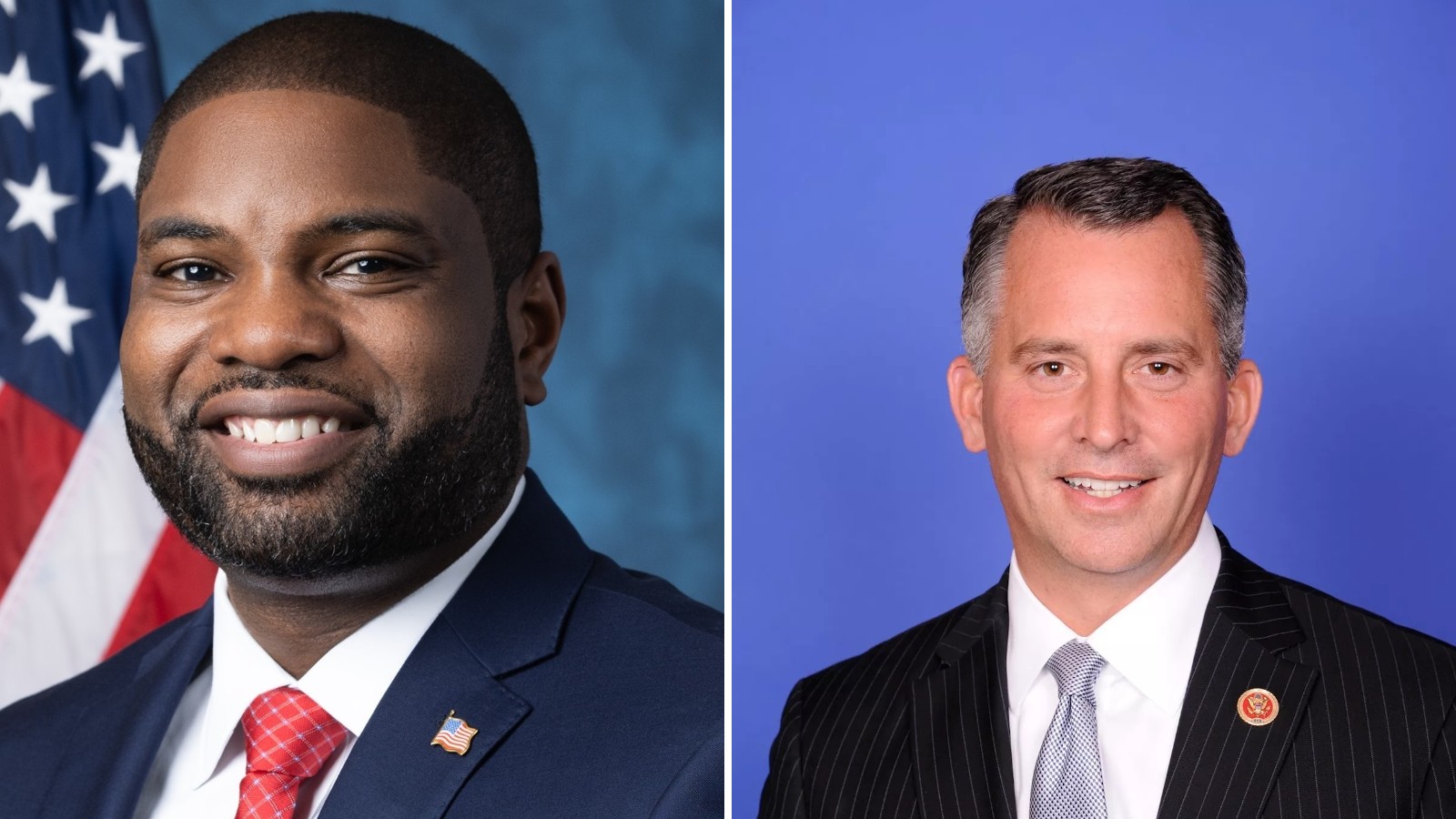
FAMU’s student journalists did what the debate stage would not: they asked Byron Donalds and David Jolly the same questions, two weeks apart, on the same campus. Line the answers up and you are not looking at two candidates. You are looking at two different states.
Part two of the FAMU Decision 2026 series. FAMU’s student journalists asked both candidates the same questions two weeks apart, making this the closest this race has come to a controlled test.
Before I tell you what these two men said, I want you to appreciate what FAMU’s students built, because it is rarer than it looks. There was supposed to be a debate. It got canceled. So the Student Government Association did something a debate would not have given you: they brought Byron Donalds in for a town hall, then brought David Jolly in two weeks later, and they handed the questions to the same two broadcast-journalism seniors, Kristen Hood and Elijah Lott, who asked both men a shared spine of questions. Same room. Same chairs. Same questions. That is a controlled experiment. When you ask two people the same question and change only the person, whatever differs in the answer is the person. Most political coverage cannot isolate the variable like that. FAMU’s students did, and they did it by accident of good planning, and it is the most useful thing to come out of this race so far.
So let me do the thing the experiment makes possible. Let me line the answers up, question by question, and show you that this is not a choice between two styles. It is a choice between two Floridas.
Start with the first question both men got, the one about public universities and what they are for. Donalds answered it like a credit analyst, which is what he used to be. He said a degree has to have “economic viability,” that it should “actually make money, put food on the table,” and then he did the thing most candidates will not do in a room full of students: he named the degrees he considers worth the money. “Engineering, finance, accounting, law, medicine, architecture,” the ones with “real economic power,” and when the room shouted back their own majors, he did not take it back. That is a real worldview, and I am going to steelman it at full strength, because a man who was dropped off at FAMU by a mother who wanted exactly that for him holds it in good faith. The argument is: an education that does not change your economic position is a receipt, not a ladder, and telling an eighteen-year-old the truth about what a major pays is a kindness, not an insult.
Now, Jolly, same question. He didn’t say which degrees pay. He talked about what the state owes the school. He said that under Frederick Humphries, FAMU had more National Merit Scholars than Harvard, and that the state then “withheld $2 billion in funding” the university was due, and that the fix is to put FAMU on “a pathway to flagship status.” He said, “a bill is due to this campus.” Steelman that one too: it says the problem was never that Black students at FAMU did not achieve; it is that the state refused to fund the achievement, and the governor’s job is to pay the debt, not to lecture the debtor about his choice of major.
Hear the difference, because it is the whole race in miniature. Asked what the university is for, one man talked about the student’s responsibility to pick a degree that pays, and the other talked about the state’s responsibility to pay what it owes. One puts the burden on the eighteen-year-old. The other puts it on Tallahassee. Neither is a lie. They are two different accounts of whose fault it is that the ladder is missing rungs.
Then came the question that broke one of the rooms. Both men were asked about the 287(g) agreements, the arrangement that deputizes campus and local police to act as federal immigration agents, and about how they would protect students from profiling. This is where the experiment pays off most, because the answers are not just different; they are opposite, and the room told you so in real time.

Donalds did not soften it. “We are going to comply with 287G because it is federal law,” he said, and then, in case anyone missed it, “Federal law is federal law.” His assurance to the students was conditional: “If you’re an American, a legal resident, you will have nothing to fear from federal immigration.” A young woman pushed back, said that was not true, and left. He kept going, into stories from five trips to the southern border, cartels and fentanyl and trafficked girls, and the argument underneath it was that “there has to be a standard in immigration,” and that compliance with the standard is what protects everyone. And then, in a detail you could not write into fiction, a fire alarm went off and ended the night.
Jolly, same question, two weeks later. “I would suspend the 287g agreement mandates.” Not comply, suspend. He framed it first as local control, a police chief in Central Florida who had to pull six to eight officers off child-sex-crime cases to send them to immigration training in a community that did not have an immigration problem. Then he went to the value: that profiling people “based on the color of their skin, the language they speak, or the accent they have” is unconstitutional, that the answer to ICE is “show us your judicial warrant,” and that an American citizen in Miami who now carries all his papers because he is afraid of getting pulled over for looking Hispanic is the actual cost. He told the Mariel story, the Cuban refugees held behind a chain-link fence in the Orange Bowl, and the mayor who said if we will not welcome the refugee we might as well throw the Statue of Liberty into the East River.
That is not a disagreement about tactics. One man says the state must comply with the federal enforcement and that compliance is itself the protection. The other says the state must resist the federal enforcement and that resistance is the protection. A Black student at FAMU, or a Haitian student, or a Venezuelan one, is being asked to choose between a governor who will hand their campus police to ICE and one who will sue to keep ICE off the campus. The woman who walked out of the first room and the warmth that met her in the second weren’t about charisma. The room was doing the math.
The experiment goes deeper, into the question each man got about his own party, and here the mirror is almost too clean. A student asked Donalds how a Black Republican can claim to understand Black struggle while backing a party she sees as rolling back Black rights. He answered with history: his party “has always been the party that fought for civil rights,” five civil rights acts passed with overwhelming Republican support, Robert Byrd filibustered the 1964 act and “stayed a Democrat senator until the day he died.” He defended the Supreme Court striking down preclearance by arguing there had not been “one instance of systematic discrimination” in voting in twenty-five years, and he pivoted to school choice as the modern civil rights fight. The argument is that the party of Lincoln is still the party of Black advancement and that the Democratic hold on the Black vote is the thing that has failed.
A student asked Jolly essentially the same thing: how can we trust a man who was a Republican for thirty years not to forget us? And Jolly gave the mirror image. “I don’t think the problem is that I used to be a Republican. I think the problem is my opponent still is a Republican.” He said he fought the Tea Party and lost, fought the Freedom Caucus and lost, fought Trump in 2016 and lost, went zero for three, and left, and that “the problem is there are people who know better today who remain in the Republican Party.” One man says the party is the historic home of Black freedom and he is proud to be in it. The other says he looked at what the party became and walked out, and the people who stayed are the ones you should question. Same question. Two men. Two readings of the same sixty years.
On DEI, the split is just as sharp and worth naming plainly, because the word does a lot of hiding. Donalds supports the law banning it and will keep it. He says he backs diversity but that “the equity portion of DEI is the thing that’s always caused the issues,” that equity means “ignoring the merit of other people.” Jolly says the opposite in almost the same breath: that Democrats “may have been on the wrong side of the argument” politically but “weren’t on the wrong side of history,” and that “DEI is a reflection of a meritocracy if it’s handled correctly.” One man treats equity and merit as enemies. The other treats them as the same project. That is not spin. It is a genuine fork in how you read fairness itself.
I will show you where they actually touch, because honesty requires it and because those touches are revealing. On the environment, both men want to finish Everglades restoration, both invoke the aquifer and the drinking water, both say the word balance. The difference is that Jolly adds a day-one, one-year moratorium on new hyperscale data centers, citing that roughly seventy-five percent of the state opposes them, and ties it to what he calls a corrupt campaign-finance system, while Donalds does not raise the data centers at all and frames the whole environmental question as a precondition for economic growth. They can agree on the swamp and still disagree on who is buying the land around it.
And they diverge hardest where only one of them was asked. Donalds alone got the affordability question, and he answered like the insurance executive he was: 20% off premiums through regulatory reform, 30% of a new home’s cost blamed on government permitting, and price transparency in healthcare so you can comparison shop. Jolly alone got the healthcare-access question, and he answered it with Medicaid expansion, the fact that Florida is one of only ten states that have not done it, that the state ranks forty-ninth in avoidable hospital costs, and a pilot to directly fund primary care in underserved counties. Put those two answers next to each other, and you see the biggest difference of all. Donalds wants to lower the market price so you can afford to buy in. Jolly wants the government to fill the gap the market leaves. One trusts the market to reach you if you free it. The other says the market has already decided not to reach Brownsville and Little Haiti, and the state has to go there itself.
So here is where I land, and I am going to land on a build, not a dunk, because the students earned that. The temptation with a piece like this is to score it, to tell you the cold room was right, and the warm room was right to be warm. I am not going to, because that is the lazy read, and because the thing FAMU actually built is more valuable than my scorecard. Those students built the instrument. They isolated the variable. They asked the same questions and let the two Floridas answer in their own words, so for once you don’t have to guess; you can compare. One Florida says the ladder is yours to climb and the state should get out of the way and tell you the truth about which rung pays. The other says the ladder is missing rungs the state tore out, and the state has to put them back. One will comply with the enforcement and call the compliance protection. The other will resist it and call the resistance protection. Those are not the same offer dressed differently. They are two different countries you could wake up in on the day after the election.
The job the students handed the rest of us is not to pick the room that felt better. It is to do what they did: hold the two answers up to the same light, on the same question, and choose the Florida you actually want to live in, and then go to the thing Kennedy Williams and Caitlin Smith kept telling that room about, the early voting that starts October 19th and the mail-ballot deadline of October 22nd. The students built the instrument. They cannot cast the vote for you. That part was always ours.
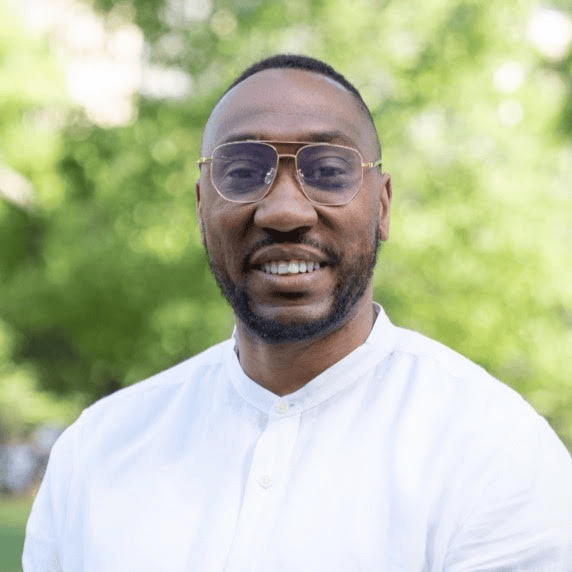
Denzel D. Burnside III is a Miami-Dade native, a minister, and a former organizer and campaign manager. He founded and leads the North Carolina Housing Table as executive director. He also founded The State (readthestate.com) and The Operative Ledger (operativeledger.com).
Hy-Lo News encourages community members, thought leaders, social commentators, experts, and really ANYONE to submit commentary expressing their opinions and sharing their points of view. The views they express in their Op-Eds are their own, but we believe people have the right to a platform to share them. However, we will never condone or publish hate speech, violence, bullying, or anything our editorial team deems problematic.
To submit your Op-Ed, email us at info@hylonews.com.
0 comments on “OP-ED | The Same Questions, Two Floridas: Donalds and Jolly, Answer for Answer”