

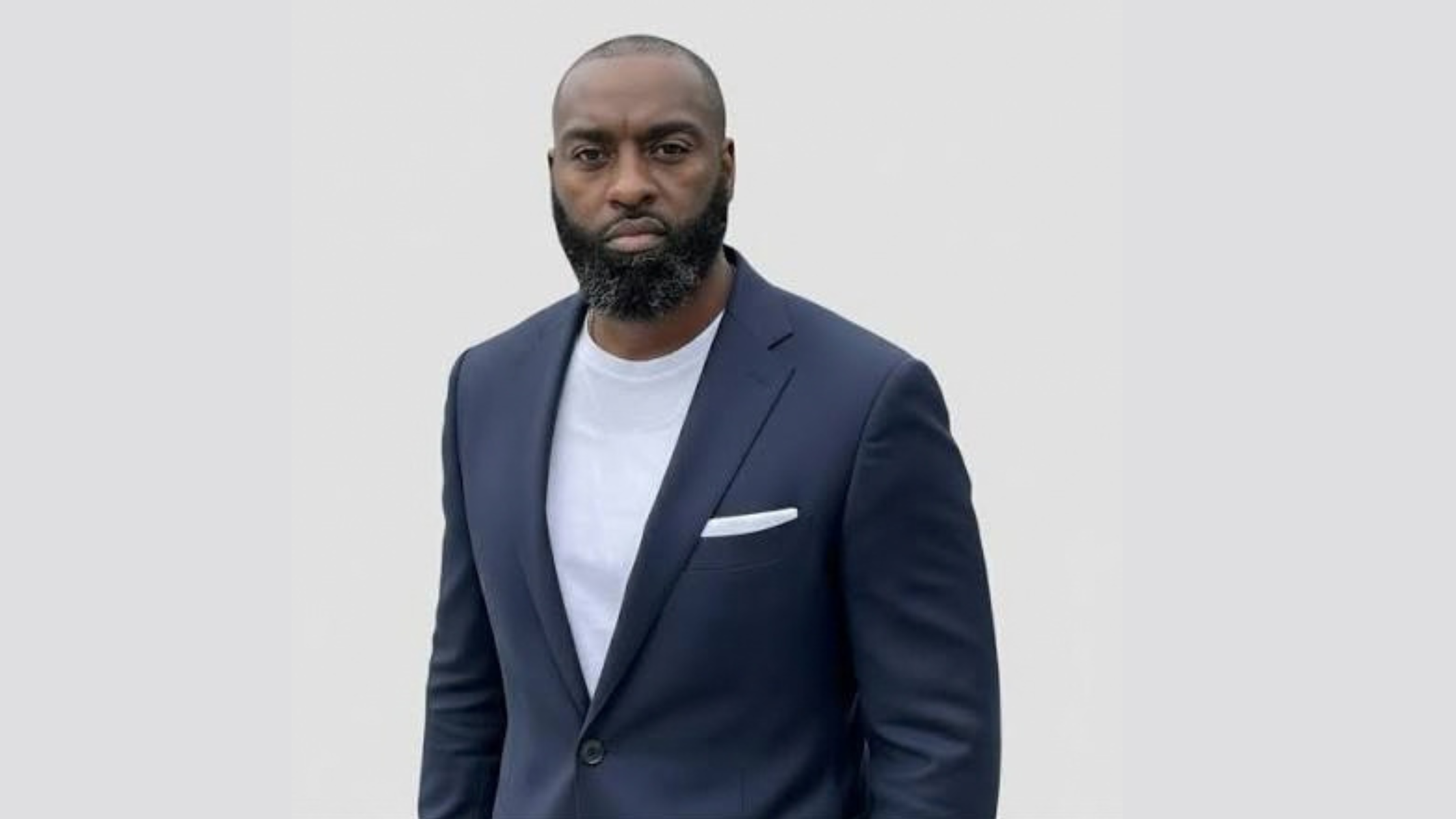
By Roderick “Rod” Mack
Today, I spoke with a good friend who shared some news with me: he had been promoted to sales manager at the car dealership where he works.
I told him I was proud of him. And I meant it.
But after our conversation ended, I found myself thinking about that promotion differently. For some people, becoming a sales manager might simply represent another step up the corporate ladder. For my friend, I understood just how much road he had traveled to get there.
My friend went to prison as a teenager. At just 15 years old, his life took a turn that would ultimately cost him approximately 20 years of his freedom.
Today, he is home. He is a husband. A father. A homeowner. A working man. And now, a sales manager.
He has done what we constantly tell people who have been incarcerated that we want them to do: come home, obey the law, work hard, take care of your family, contribute to society, and become a productive member of your community.
Yet I also understand that even after someone serves his sentence, there can be another sentence waiting for him.
The sentence of a label.
Felon.
And sometimes that sentence has no expiration date.
His promotion caused me to think deeply about my own life and how incredibly thin the line can be between two young men growing up in the same neighborhood whose lives take dramatically different paths.
I grew up in the Miami Gardens area. Many of the young men I called friends grew up under the same circumstances I did. We played together. We hung out together. We experienced many of the same things.
There wasn’t some extraordinary difference between us.
For me, one of the differences was football.
For a couple of hours each day, coaches saw something in me. They picked me up and took me to practice. Sometimes they took me outside my neighborhood. On weekends, I was exposed to places, people, and possibilities that I otherwise might never have seen.
Those few hours mattered.
They changed the trajectory of my life.
Football helped me become a scholar-athlete and an All-American. It eventually took me to the University of Miami, where I played football and earned degrees in finance and business management. I went on to work on Wall Street, build my own business, raise a family, and spend years pouring back into the community that raised me.
I founded a youth football program in my hometown and have invested my own time and resources into young people. I’ve had the privilege of exposing children to opportunities outside their neighborhoods, just as coaches once did for me.
I say none of that to create distance between myself and the young men whose lives went in another direction.
I say it for exactly the opposite reason.
I know how easily I could have been one of them.
I wasn’t a perfect teenager. I made immature decisions. I put myself in situations that, looking back as a 49-year-old father, I recognize weren’t always smart.
At 16 or 17, I thought I understood the world.
Today, I realize how little I actually knew.
And that is precisely why I struggle with a society that can decide that something a person did as a child should permanently define the man he becomes.
Recently, that issue became personal in another way.
After I decided to run for Miami Gardens City Council, political opponents circulated a negative campaign mailer highlighting the fact that I had previously been arrested.
I have never been convicted of a crime.
Still, someone believed the word “arrested” could outweigh everything else voters might know about my life.
Think about that.
If an arrest with no criminal conviction can be presented as something that should cause people to question decades of work, family, business leadership, mentoring, and service, imagine the mountain facing someone who actually has a felony conviction.
And the more I thought about it, the more I realized my friend’s story is not an isolated one.
This story runs through my own family and through the lives of people I love.
My father received two life sentences and spent 22 years in prison. He came home and built a successful business.
My uncle spent decades in prison. He came home, built his own plumbing business, and today serves as a deacon in his church.
Another friend went to prison, came home, and built a business in real estate.
Another served more than a decade. Today, he has a family, owns a home, and has built a corporate career.
These are not statistics to me.
These are people I know. These are people I love. These are people whose lives I have watched.
And that realization has forced me to confront something in myself.
For all these years, I don’t know that I fully understood the weight they were carrying.
I knew their stories. I knew where they had been. I celebrated what they accomplished when they came home. But I don’t know that I truly appreciated what it meant to rebuild a life while carrying a label that can follow you into a job interview, a housing application, a business opportunity, a relationship, or even into a room full of people who have known you your entire life.
So, in some ways, this essay is also my acknowledgment to them.
Maybe even my apology.
I saw your success.
I didn’t always see the mountain you had to climb to achieve it.
And maybe that is part of the responsibility for those of us who were fortunate enough to take a different road: not simply to celebrate people when they overcome, but to understand what they had to overcome in the first place.
Imagine coming home after serving 10, 15, or 20 years and trying to convince an employer that you are more than the worst decision you ever made.
Imagine trying to rent an apartment.
Get a professional license.
Build credit.
Provide for your children.
Earn someone’s trust.
Become a leader.
Or simply introduce yourself without wondering when someone will discover your past and decide that nothing you’ve done since matters.
That should force us to confront a difficult question:
When is a debt to society actually paid?
Accountability matters. People should be responsible for the harm they cause. Victims matter. Public safety matters.
But accountability and redemption are not opposites.
If someone serves the sentence society imposed, comes home, changes his life, works, raises his or her children, and contributes to their community, then at some point we must decide whether we truly believe in rehabilitation or whether we believe in permanent punishment.
This conversation carries particular weight in Black communities like the one that raised me.
The history of the War on Drugs, policing, sentencing, and mass incarceration in America is complicated, but generations of Black families have lived with its consequences. Understanding that history does not excuse individual wrongdoing. Context and personal responsibility can exist at the same time.
We can say, “You made a mistake,” while also saying, “That mistake does not have to be the final chapter of your life.”
And I believe there is another responsibility we have to confront within our own community.
We should reject the weaponization of someone’s past simply to discredit the person they have become.
When words like “arrested,” “convicted,” or “felon” are pulled from someone’s past and used without context to erase decades of growth, family, work, and service, we should be willing to call that tactic what it is.
We should ask a better question:
Who is this person today?
That doesn’t mean ignoring someone’s past. It doesn’t mean pretending harm never occurred. And it certainly doesn’t mean abandoning accountability.
It means refusing to believe that redemption is something we preach about in church on Sunday but deny people in real life on Monday.
If we believe people can change, our actions should reflect it.
If we believe in second chances, those second chances have to belong to real people, including people whose mistakes make us uncomfortable.
And if someone has spent years or decades demonstrating through his actions that he is a different man, we should be very careful about reducing his entire existence to a word attached to his name years ago.
That distinction matters because children are listening.
What are we telling the young man whose father is coming home from prison?
What are we telling the mother whose 16-year-old son made a terrible decision?
What are we telling someone who served his sentence and is desperately trying to rebuild?
Are we saying, “Do the work, change your life, and we’ll welcome you home”?
Or are we quietly telling them, “No matter what you accomplish, we will always introduce you by the worst thing you’ve ever done”?
Because if it is the latter, we should not be surprised when people begin to believe there is no road back.
I want something different for Miami Gardens and communities like ours.
I want us to become better at creating second chances, not just talking about them.
That means mentorship before young people enter the criminal justice system. It means education, athletics, job training, and exposure so another child can encounter the coach, teacher, or mentor who changes his trajectory.
And I know personally how much that intervention can matter.
When I look back at my own childhood, sometimes I think the difference between two young men whose lives went in completely different directions may have been nothing more than a few hours a day and an adult who cared enough to intervene.
Someone picked me up.
Someone took me to practice.
Someone showed me something beyond my immediate surroundings.
Someone saw possibilities in me before I fully understood those possibilities for myself.
Sometimes the difference between two lives is simply that somebody intervened at the right moment.
That is why mentorship matters. That is why exposure matters. And that is why we cannot give up on our children before they’ve had a real opportunity to discover who they can become.
But our responsibility cannot end with prevention.
We also have to be there on the other side.
We should support pathways to employment for returning citizens. Encourage businesses willing to hire people who have demonstrated rehabilitation. Connect people to training and certifications. Help families reunify. Create mentorship opportunities. And allow people who have earned another chance to contribute to the very neighborhoods from which they came.
Most importantly, we have to change how we see people.
A criminal record can tell us something that happened in someone’s life.
It cannot tell us the entirety of someone’s life.
An arrest is not a conviction.
A conviction is not an entire identity.
And a mistake made by a 15-year-old should not automatically become the obituary for the dreams of a 49-year-old man.
That’s why that phone call from my friend meant so much to me.
I wasn’t simply congratulating a friend on becoming a sales manager.
I was thinking about a 15-year-old kid whose life could have ended, figuratively or literally, behind prison walls.
Instead, that kid became a man.
A husband.
A father.
A homeowner.
A professional.
And a productive member of his community.
And now, when I look around, I realize he isn’t alone.
I see my father.
I see my uncle.
I see my friends.
Men who came home carrying histories they could not change and decided to build futures anyway.
Their journeys don’t erase their pasts. Their journeys demonstrate what can happen when human beings refuse to allow their pasts to erase their futures.
There are thousands of men and women carrying stories like theirs.
Maybe instead of constantly asking them what they did years ago, we should spend a little more time asking:
Who have you become since then?
Second chances cannot simply be something we say we believe in. They have to show up in whom we hire, whom we trust, whom we welcome home, whom we allow to lead and, most importantly, how long we are willing to hold someone’s worst moment against them.
Because ultimately, a community should not be judged only by how it responds when one of its children falls.
We should also be judged by whether we extend a hand when that child now a man or woman, is ready to stand back up.
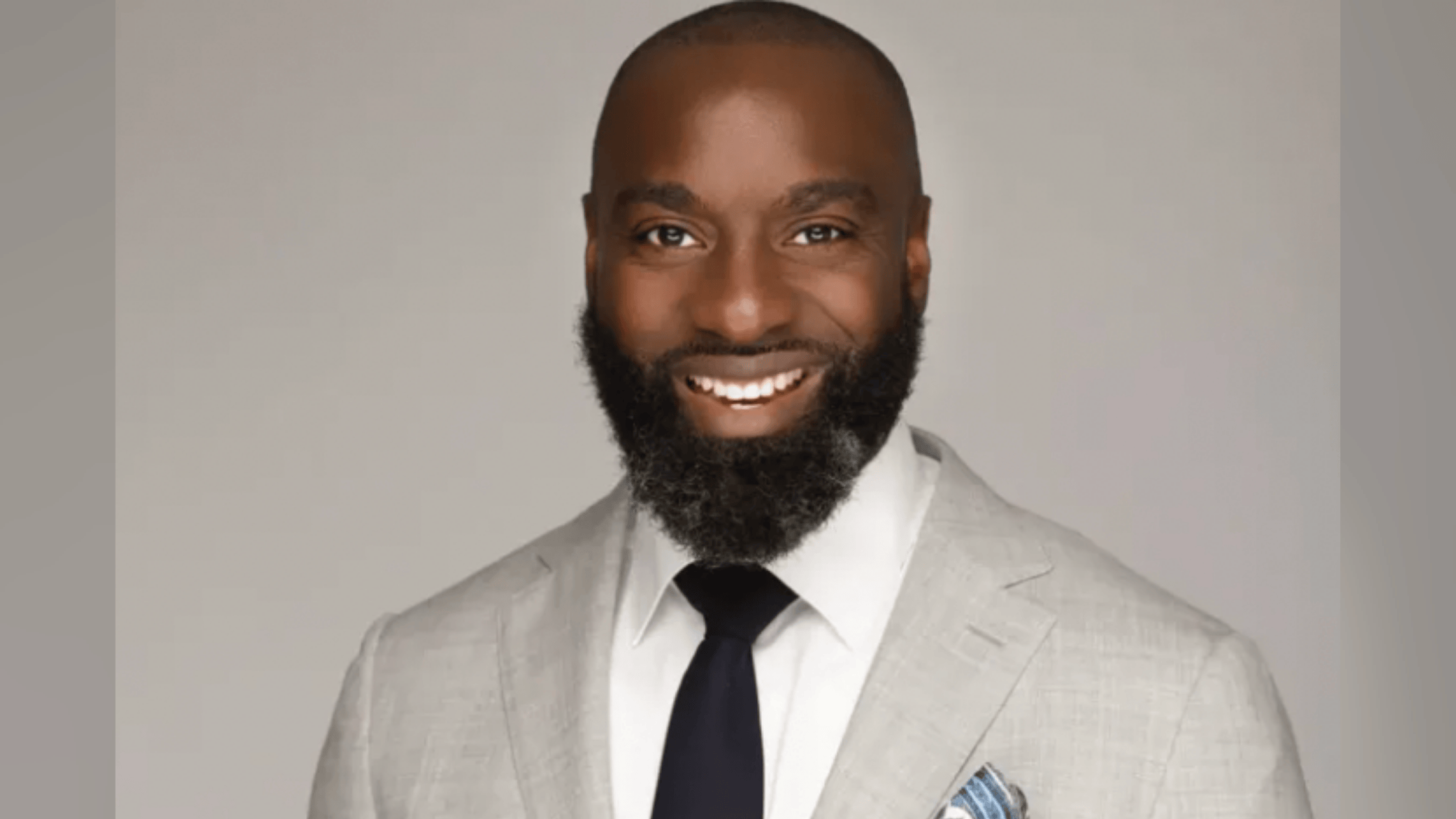
Roderick “Rod” Mack is a Miami Gardens native, former University of Miami football standout and finance professional whose career has spanned Wall Street, entrepreneurship and community leadership. Drawing on his own experiences, he founded a youth football program dedicated to mentorship and expanding opportunities for young people in the community where he was raised. A husband, father and longtime advocate for youth development, Mack writes about the intersection of personal responsibility, second chances and the power of community intervention.
_____
Hy-Lo News encourages community members, thought leaders, social commentators, experts, and really ANYONE to submit commentary that expresses their opinion and shares their point of view. The views the writer expresses in their Op-Eds are their own and do not reflect the views of Hy-Lo News. NOTE: We will never condone or publish hate speech, violence, bullying and anything our editorial team deems problematic and violates are editorial policies.
To submit your Op-Ed email us at info@hylonews.com.
0 comments on “OP-ED: When Does a Man Get to Move Beyond His Worst Day?”