


A debate was supposed to happen. The grown-ups could not make it happen. So a group of FAMU undergraduates built the only real gubernatorial forum of the cycle, ran it with more discipline than the campaigns, and taught the state what accountability actually looks like.
Part three of the FAMU Decision 2026 series. A word for the students who built the only real gubernatorial forum of the cycle.
I want to take the two men off the stage for a minute, because everybody is going to write about Byron Donalds and David Jolly, and almost nobody is going to write about the people who actually built the thing. So let me correct that: the real story of what happened at Lee Hall isn’t what the candidates said. It is who made them say it.
Here is the setup, and you should sit with how backward it is. The two men running to govern Florida were supposed to debate. It fell apart. The professional apparatus of a statewide campaign, with its consultants, advance teams, and money, couldn’t put two candidates on one stage. Into that failure stepped a student government association at a historically Black university, and they did what the grown-ups couldn’t. They built it themselves. Decision 2026, they called it, and by their own account it was not handed to them; it was built from the ground up by a student committee that spent months, in the student body president’s words, navigating the red tape and handling the logistics and fighting to make sure the student experience came first. FAMU was the first institution in Florida to host a governor’s forum this cycle. Not the first university. The first institution, period. The eighteen- to twenty-two-year-olds beat everyone.
Look at who ran it, because the credentials matter, and they show this wasn’t amateur hour. Kennedy Williams, a fourth-year history pre-law student, serving as both student body president and a university trustee, opened both nights and set the terms. Kayla Davis, a fourth-year political science scholar, co-chaired and presided. Jeremiah Evans, a third-year political science honor scholar, chaired the whole committee. And the two moderators who put the questions to both men were broadcast journalism seniors: Kristen Hood, who spent her summer in a science journalism fellowship at MIT and at the Bloomberg HBCU academy, and Elijah Lott, a senior producer for the campus station who interned at public media and won a broadcasters’ scholarship. Those are not placeholders. Those are young journalists who did the one thing the debate stage could not deliver: they asked both candidates the same questions and made them answer.
And here is the part that should embarrass the professional class. The students ran it with more discipline than the campaigns run anything. The university president, Marva Johnson, stood up and drew the line most institutions are too timid to draw out loud. FAMU does not endorse candidates, she said, twice, so no one could miss it. She said the university endorses an informed student body, one that asks questions and listens carefully to the answers. She told the room that some of what they heard would confirm what they believed, and some would challenge it, and that they owed both the same attention and the same respect. That is the civil-discourse charge Florida’s own board of governors handed every state university, and FAMU is the campus that actually took it seriously, on a night when it would have been easy not to.

Did the rooms stay perfectly calm? No, and I am not going to pretend they did, because the honest version is better than the tidy one. At the Donalds town hall, a young woman reached her limit during the immigration exchange and walked out; friction followed, and near the end a fire alarm scattered the room. At the Jolly town hall, the students pressed him hard enough that he caught himself getting worked up and apologized. But look at what did not happen. Nobody got shouted down into silence. The moderators kept the questions coming. The student leaders kept asking the room to hold its applause and honor the code of conduct so every voice in the line could be heard, and when prepared student questions threatened to crowd out the people waiting at the microphone, they handled it. That room didn’t fail at civil discourse. That is a room doing the hard, real version of it, the version with actual disagreement in it, which is the only version that counts.
Now let me turn, because praising young people is easy, and I want to say something harder and more useful. This matters not because it was cute that students pulled it off. It is that they exposed how low the bar has fallen everywhere else. A debate commission could not seat these two men. A statewide press corps did not create the forum. The campaigns themselves, one of which declined to debate in the general, did not make it happen. Volunteers who cannot yet rent a car without a surcharge had to supply the accountability that is supposed to be the backbone of an election: the simple act of putting the people who want power in a room and making them answer the same questions. When undergraduates do the civic work institutions with budgets and mandates have quietly stopped doing, the undergraduates aren’t the story. The institutions are. The students did not just host a forum. They filled a vacuum, and the vacuum is the scandal.
So here is where I land, and it is a build, because these young people earned a build and not a lecture. FAMU students proved the model isn’t broken; the will is. The format works. Bring the candidates in, hand the questions to sharp young journalists, hold the room to a standard, and let the people who will live longest with the decisions do the asking. It is repeatable. Every HBCU in this state could do it. Every public university could. What stands between Florida and a real season of accountability forums isn’t capacity, because a student committee with no budget just demonstrated it. It is nerve, and the students have more of it than the institutions do.
President Johnson told that room they were future physicians and engineers and lawyers and the people who would drive the state. She was right, but she undersold it, because they were not waiting for the future. On two nights, two weeks apart, in Lee Hall, they were already doing the job, the actual job of a citizen in a democracy: making the powerful stand there and answer. The candidates will get the headlines. They should not get the credit. The credit belongs to the kids who built the stage, wrote the questions, kept the room, and showed a whole state what showing up looks like. At the very least, the rest of us can match them.
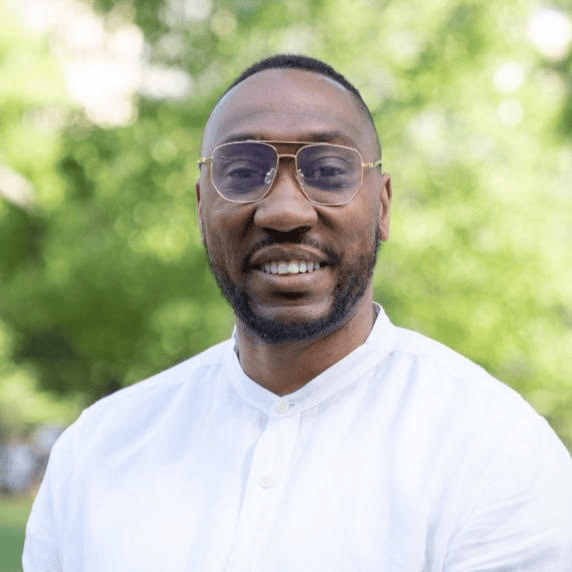
Denzel D. Burnside III is a Miami-Dade native, a minister, and a former organizer and campaign manager. He founded and leads the North Carolina Housing Table as executive director. He is also the founder of The State (readthestate.com) and The Operative Ledger (operativeledger.com), both by DB3 Wire.
Hy-Lo News encourages community members, thought leaders, social commentators, experts, and really ANYONE to submit commentary expressing their opinions and sharing their points of view. The views they express in their Op-Eds are their own, but we believe people have the right to a platform to share them. However, we will never condone or publish hate speech, violence, bullying, or anything our editorial team deems problematic.
To submit your Op-Ed, email us at info@hylonews.com.
0 comments on “OP-ED | The Students Did the Job: The Rattlers Who Built the Forum the Grown-Ups Couldn’t”