

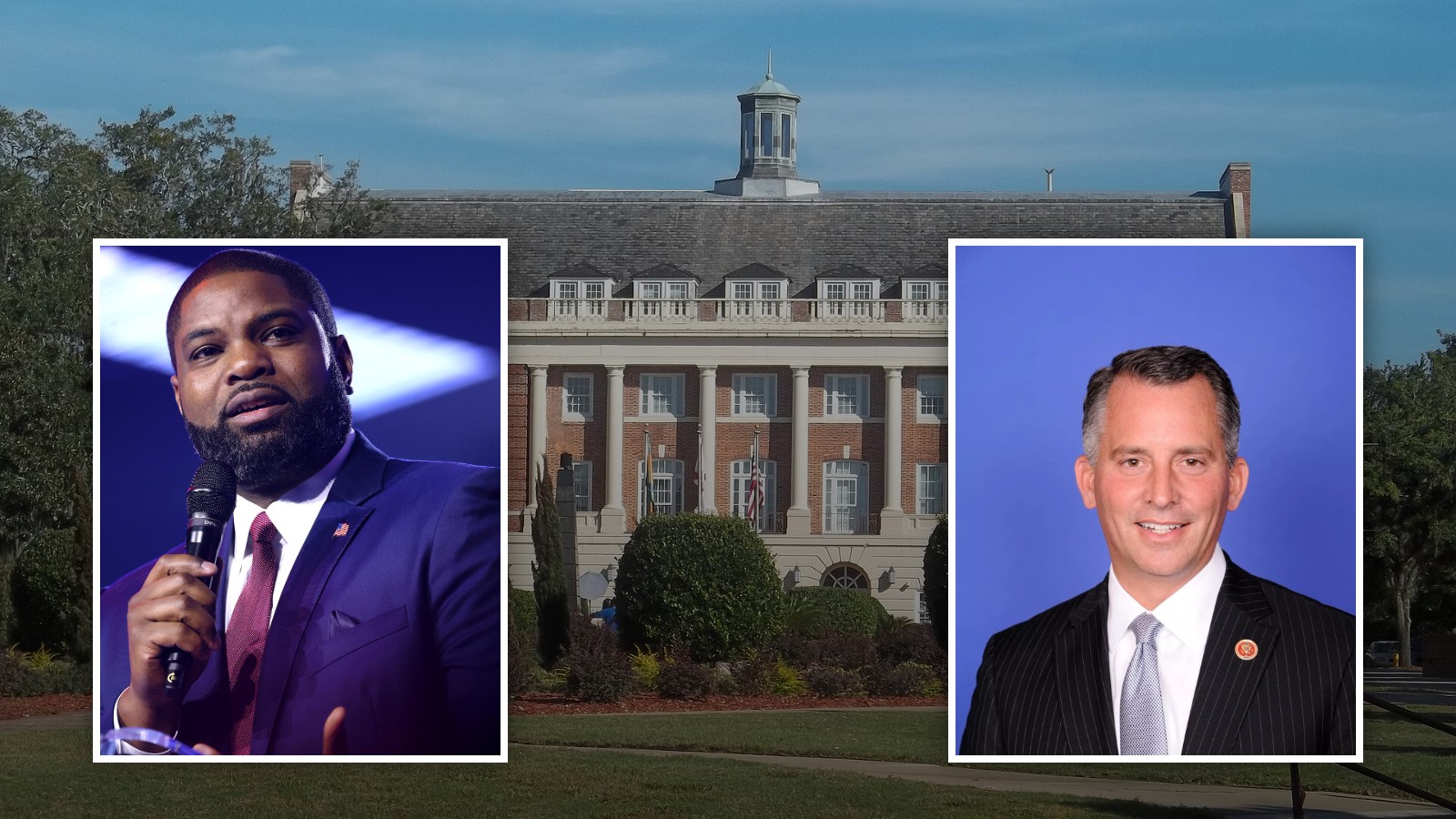
Part one of a three-part series on FAMU’s Decision 2026 town halls, where the university’s student government brought both candidates for Florida governor to Lee Hall after the planned debate collapsed: Byron Donalds on September 29 and David Jolly on October 12. Grounded in the two town-hall transcripts. Disclosure: Byron Donalds attended FAMU, a tie I have written about before.
The fight for the Florida governor’s mansion ended up on the campus of a historically Black university for a reason, and it’s no coincidence or small matter. FAMU was supposed to host a televised debate between Byron Donalds and David Jolly. The debate was canceled after Jolly declined to debate in the general. So FAMU’s own student government did what the grown-ups wouldn’t and invited both men, separately, to stand in front of Black students and answer for themselves. Two town halls, two weeks apart, one campus, the same student moderators asking the same questions. And if you want to understand the choice before Black America, you don’t need a poll. You only need to look at the two rooms FAMU gave these men, because the rooms told the truth the speeches tried to dress up.
Start with the first room, the one with the fire alarm. When Donalds came to Lee Hall on September 29, the room did not give him the warm homecoming a man might expect from the school he attended from 1996 to 1999. It gave him friction. Students pressed him, and the tension sharpened exactly where you would expect, over the campus 287(g) immigration-enforcement agreements, where he said flatly, “We are going to comply; federal law is federal law,” and a young woman stood up, told him that was not true, and walked out, and over the Stop WOKE Act and critical race theory, which he said he supports and would continue. And then, in a detail so on-the-nose you could not put it in fiction, a fire alarm went off near the end and scattered the room. A Black Republican, a FAMU man, coming home to make his case, and the building itself seemed to object. I won’t pretend the alarm meant anything. But the friction did. The room wasn’t hostile for its own sake. Black students were doing what Black students at an HBCU are trained to do: refuse to let a man’s biography stand in for his record, and ask the hard question about the agenda behind the smile.

Now the second room, two weeks later, because the contrast is the entire piece. When David Jolly came on October 12, a white former Republican who switched parties, the students gave him a notably warmer reception. They pressed him too, on academic freedom, on the DEI ban, on school choice, on healthcare, on the same 287(g) agreements, and he answered, and when a student asked how they could trust a man who spent thirty years as a Republican, he said the problem is not that he used to be one; the problem is “there are people who know better today who remain in the Republican party.” And the room was with him. Sit with that. The Black alum got the friction and the fire alarm. The white convert got the warm reception. If you think that is just about personality, you are not reading the thing FAMU was actually saying.
Here is what it was saying, and I am going to steelman both visions at full strength before I weigh them, because the point of this piece is the choice, not a verdict handed down from me. Donalds brings a vision I will call uplift-through-opportunity. It says the path forward for Black people is not through the party that has held the Black vote for sixty years and, in his telling, has little to show for it, but through economic opportunity, school choice, business, and a break from a political loyalty he considers a dead end. That is a real argument, held in good faith by real Black people, and it doesn’t need a warm room to be worth hearing. Jolly brings a different vision, one I will call protection-through-coalition. It says the immediate threat to Black Florida is an agenda, the voucher-and-voting-and-enforcement agenda, that is actively costing Black people right now, and that the job of the moment is to stop it, through a coalition broad enough to win, even if the man leading that coalition is an unlikely convert. That is also a real argument, held in good faith, and the warm room doesn’t automatically make it right.
So why did the rooms break the way they did, and what does it mean for Black people beyond one campus? Here is my read, offered as one argument with the other left standing. The friction Donalds met was not a rejection of his biography. It was a refusal of the trade. Those students at that school understood something in their bones: the vision Donalds carries asks them to accept, in exchange for the dignity of a first, an agenda that targets the very institution they were sitting in. FAMU is not an abstraction. It is an HBCU, a monument to Black self-determination, and it sits inside a higher-education system that the movement Donalds represents has spent years reshaping, the same movement behind the DEI ban and the Stop WOKE Act he stood in that room and defended. Cheering him in that room would have been cheering the arsonist in the building, and the students weren’t going to do it, FAMU man or not. And the warmth Jolly got was not love. It was relief, the relief of a room under attack, hearing someone say he was there to stop it. Neither the friction nor the warmth was really about the men. Both were about the agenda, and which man the room believed was carrying it.
But I will not let my own side off easy either, because the honest version cuts both ways. A warm reception is not a record, and a room full of students relieved to hear a white former Republican say the right things should ask themselves the same hard question they put to Donalds: not whether he says he is with you, but what he will actually do, and whether the coalition he leads will remember FAMU after the votes are counted. The friction the students gave Donalds was the right instinct: refusing to let presence substitute for the record. The danger is extending the warmth to Jolly without the same scrutiny, because a people that interrogates one vision and merely enjoys the other is not choosing. It is being comforted.
That is the tale of two FAMUs, and it is the tale of Black America in one campus. Two visions, uplift-through-opportunity and protection-through-coalition, walked onto the same ground, and the ground gave each of them a room, and the rooms were an argument. The lesson is not that the warm room was right and the cold one was wrong. The lesson is that FAMU, on two nights two weeks apart, did what the whole community has to do: it made both men stand there and answer, and it refused to let either of them get by on a smile alone. That is the inheritance of the HBCU, a place built to turn Black young people into citizens who read the record, not just the room. The question that leaves the campus and comes home to all of us is whether we will do what those students did, to both men: demand the record behind the vision, vote for the one that survives it, and keep demanding even after the winner is sworn in. Two visions came through one forum. The forum did its job. Now the rest of us have to do ours.
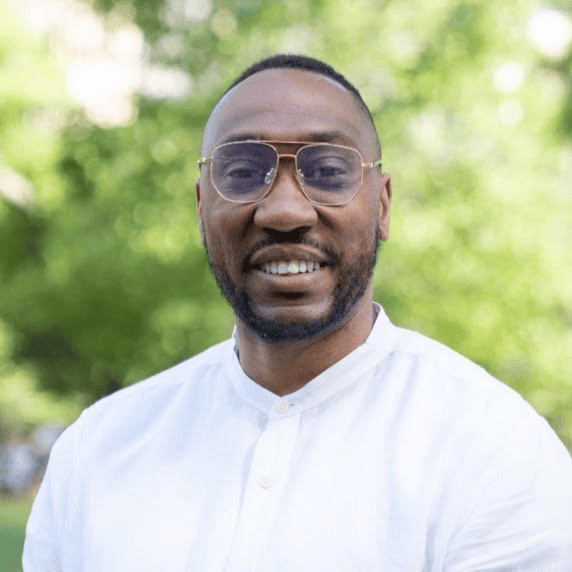
Denzel D. Burnside III is a Miami-Dade native, a minister, and a former organizer and campaign manager. He founded and leads the North Carolina Housing Table as executive director. He also founded The State (readthestate.com) and The Operative Ledger (operativeledger.com).
Hy-Lo News encourages community members, thought leaders, social commentators, experts, and really ANYONE to submit commentary expressing their opinions and sharing their points of view. The views they express in their Op-Eds are their own, but we believe people have the right to a platform to share them. However, we will never condone or publish hate speech, violence, bullying, or anything our editorial team deems problematic.
To submit your Op-Ed, email us at info@hylonews.com.
0 comments on “OP-ED | Two Candidates, One HBCU: What Donalds and Jolly’s FAMU Visits Say About Florida’s Future”