

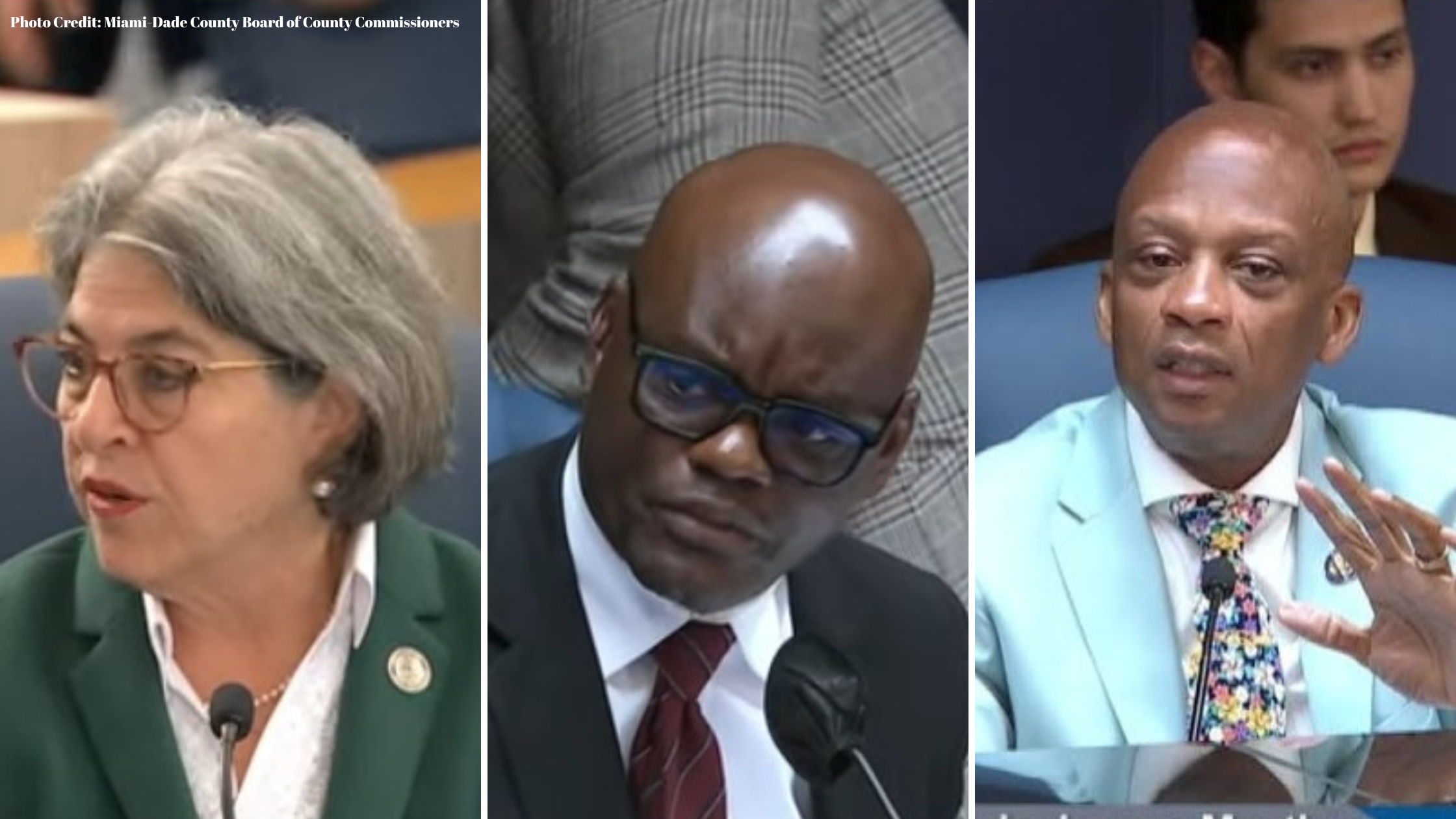
Miami-Dade county budget season is in full swing with public scrutiny, major concerns, and community based organizations (CBOs) on the chopping block. Much of the contention has been around Mayor Daniella Levine Cava’s proposed 2025-2026 budget that totes a $402 Million gap in funding, which could lead to cuts in grants that supports CBOs. What made this issue gain more problematic attention was the fact that Miami-Dade County is set to spend more than $40 Million dollars on the 2026 FIFA World Cup games, when the proposed budget cuts to fund COBs was nearly $40 Million.
“You all know one of the most important things that I do as Mayor is produce a proposed budget to you for your consideration– a balanced budget. We don’t have deficit spending in Miami-Dade County and one that reflects the maximum benefit to each tax payer of the dollars that they invest and provides the best possible services that everybody needs to thrive and keep our costs low for our residents,” said Mayor Cava during the August 20th “Committee of the Whole” meeting, what was called to discuss the proposed budget but no votes were taken.
Critics complained that Miami-Dade County couldn’t dare spend that much money on the three week soccer event when nonprofits would lack funding from the county. The community argued that Miami-Dade County should restore funding to COBs by moving the FIFA funds to cover the funding gap. However, doing that switch of funds would be easier said than done.
Miami-Dade County’s $46 million commitment to the 2026 FIFA World Cup is not optional—it’s binding. That’s the message county leaders made clear as budget debates heated up this summer and residents questioned why critical funding for CBOs seemed to be cut while World Cup spending remained untouched. The reason: Miami-Dade signed onto a host city agreement years ago, and that deal obligates the county to provide public safety, transit, and facilities support as part of the bid that convinced FIFA to select Miami as one of its 16 U.S. host cities. Walking away now could expose the county to legal penalties, financial fallout, and reputational damage that could extend far beyond soccer.
How FIFA Came to Miami
Hy-Lo News reviewed Miami-Dade County’s bid proposal and discovered that Miami’s World Cup story began under then-Mayor Carlos Gimenez, who in January 2018 pushed through the resolution that allowed Miami-Dade to formally join the United Bid, a joint pitch by the U.S., Canada, and Mexico. That resolution designated the Greater Miami Sports Commission (then chaired by businessman Rodney Barreto) as the official host committee. Gimenez, backed by county commissioners and the Greater Miami Convention & Visitors Bureau (GMCVB), argued that landing FIFA would cement Miami’s reputation as a global sports capital, just as it had done with Super Bowls and international tennis tournaments.
FIFA awarded the 2026 tournament to North America in June 2018, and by June 2022, Miami was officially selected as a host city, with matches set for Hard Rock Stadium. Behind the scenes, Dolphins owner Stephen Ross, who has made Hard Rock the centerpiece for global sports events from the Super Bowl to Formula 1, used his international connections to help secure Miami’s place on the map.
Who Runs the “FIFA 2026 Show” Locally
The Miami Host Committee—chaired by Rodney Barreto, a politically connected lobbyist and businessman who has overseen multiple Super Bowl committees—sits at the center. Working alongside the GMCVB, which manages tourism promotion and corporate sponsorships, the host committee is tasked with raising private dollars to offset costs and ensuring Miami meets FIFA’s requirements. The county itself provides public services: police, fire, transportation, and emergency management for events like the Fan Festival at Bayfront Park, which alone could draw hundreds of thousands of visitors.
The $46 Million Breakdown
According to the Miami Herald, Miami-Dade’s $46 million obligation will largely cover:
Public safety and emergency services (police, fire, EMS).
Transit and traffic management to handle game-day crowds and Fan Fest visitors.
Bayfront Park Fan Festival operations, including infrastructure, sanitation, and permitting.
Facility upgrades and staffing support at Hard Rock Stadium.
Organizers expect corporate sponsors—secured through the GMCVB and Barreto’s host committee—to help absorb costs, as has been the case with other mega-events in Miami. But the baseline public obligation, written into the bid, cannot be erased.
The Budget Battle: FIFA vs. CBOs
The funding came under scrutiny this summer after Mayor Daniella Levine Cava unveiled a proposed 2025–26 budget that revealed a $402 million shortfall, tied to expiring federal COVID relief and state/federal dollars that never materialized. That hole forced tough choices, including reduced allocations for CBOs that provide youth mentoring, afterschool care, domestic violence prevention, and re-entry programs.
At Wednesday’s meeting to discuss the budget, Commissioner Oliver Gilbert explained that the county has obligations they have contractually promised, but finding a sustainable way to fund COBs should be done.
“Our obligations aren’t optional. We as a board have to find funding for CBOs out of recurring dollars so we don’t have this conversation every year,” said Gilbert.
Vice Chairman Kionne McGhee, who has led the charge for CBO funding to be restored in the upcoming fiscal year, proposed during the August 20th meeting creating a dedicated trust fund to ensure these groups aren’t left scrambling every year. He’s been a vocal critic of cutting funding for CBOs while keeping funding for the 2026 FIFA World Cup.
“Until the Mayor’s proposed budget fully restores the $46 million to the organizations saving lives in our neighborhoods — not stadiums — I will oppose every dime spent on FIFA,” McGhee said to the Miami Times in a recent article. “Miami-Dade’s soul is not for sale. We choose communities over stadiums, people over spectacle, and compassion over glamour.”
During the meeting commissioners and county leaders acknowledged that many CBOs relied on temporary funding dollars, despite repeated warnings from the Mayor’s office that those funds were never permanent. Still, the loss stings, especially for nonprofits who serve Black and Brown neighborhoods where county-funded programming often fills the gap left by state or federal underinvestment.
Why FIFA Money Can’t Be Touched Without Consequences
Community frustration is understandable: millions for soccer, cuts for social services. But unlike discretionary county allocations, the FIFA spending is tied to a binding host city contract. Cities that have tried to renegotiate similar deals have faced fallout. For example, Chicago pulled out of World Cup consideration early after refusing FIFA’s financial terms, forfeiting its chance to host. In Denver, resistance to funding commitments contributed to the city being passed over entirely. If Miami were to back out now, not only could it face lawsuits, but it would also risk losing credibility for future mega-events like Super Bowls, which are economic engines for the region.
The Human Impact: CBOs in Jeopardy
Among the organizations facing cuts are groups providing after-school enrichment, re-entry services for returning citizens, and neighborhood-based cultural programs. Advocates argue these nonprofits save taxpayer money by preventing crime and supporting families. Commissioner Gilbert acknowledged this reality in Tuesday’s meeting, urging the county to find a sustainable solution.
What’s Next and How You Can Have Your Voice Heard
The fight over Miami-Dade’s budget is far from over. The next two budget hearings will be held on:
Thursday, September 12, 2025
Thursday, September 26, 2025
The final budget must be adopted by the end of September. Residents can speak during public comment at both hearings to voice concerns about funding priorities—whether for FIFA obligations, CBOs, or other county needs.
Sign up for our weekly email newsletter and watch our weekly LIVE podcast news show every Thursday at 5:30pm. Subscribe to our YouTube page to get alerts for the show.
Do you have news to share? If so, send Hy-Lo News your story ideas by clicking here.
Pingback: Mayor Eileen Higgins Faces Backlash From Black Nonprofits Over Alleged “Funding Freeze” Amid Budget Fallout – Hy-Lo News